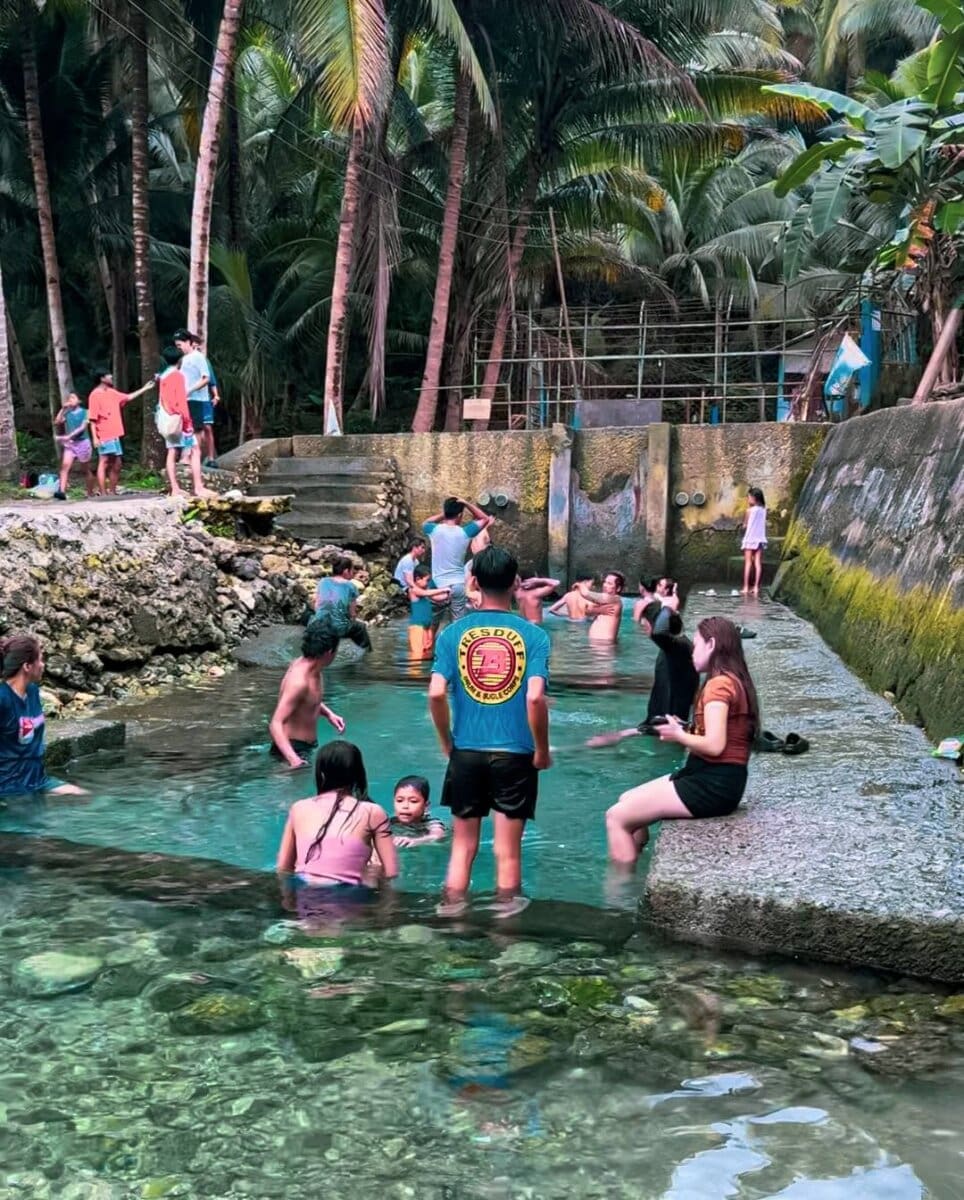
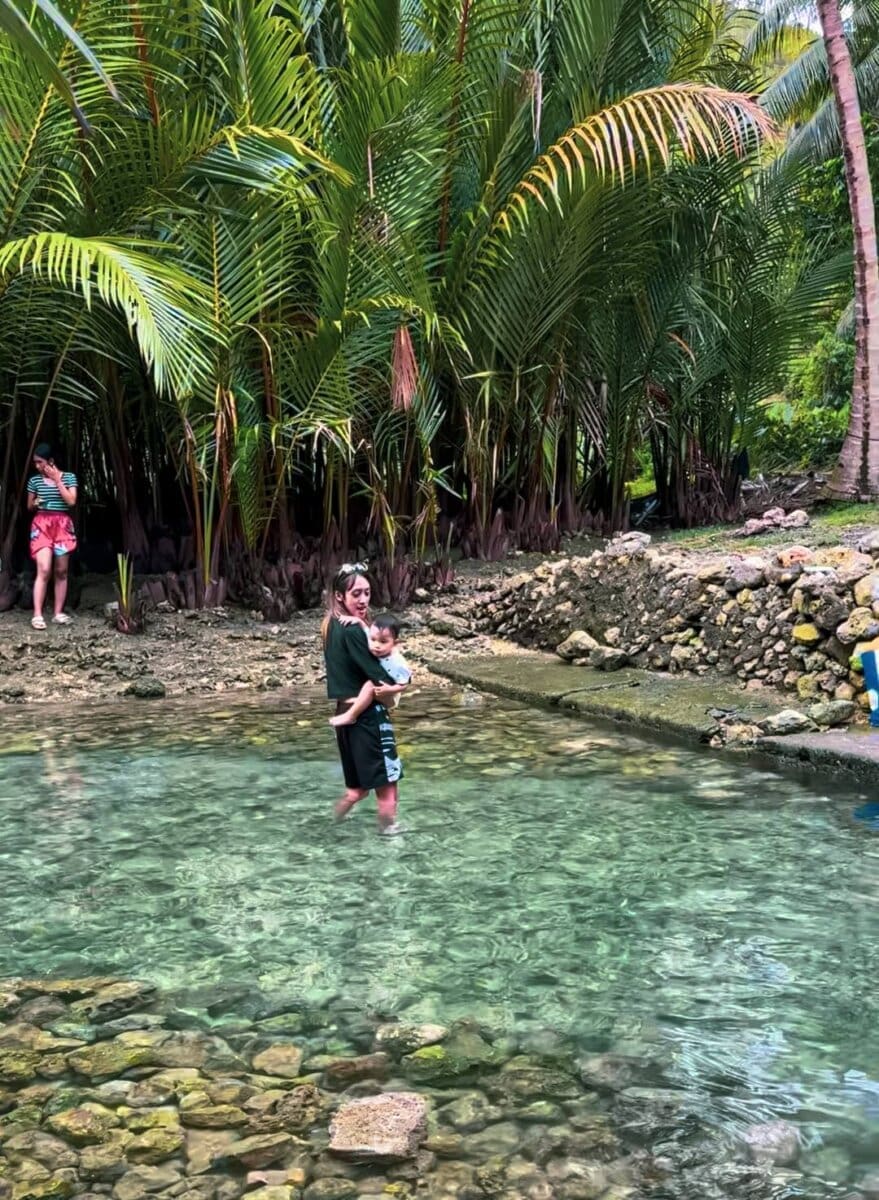
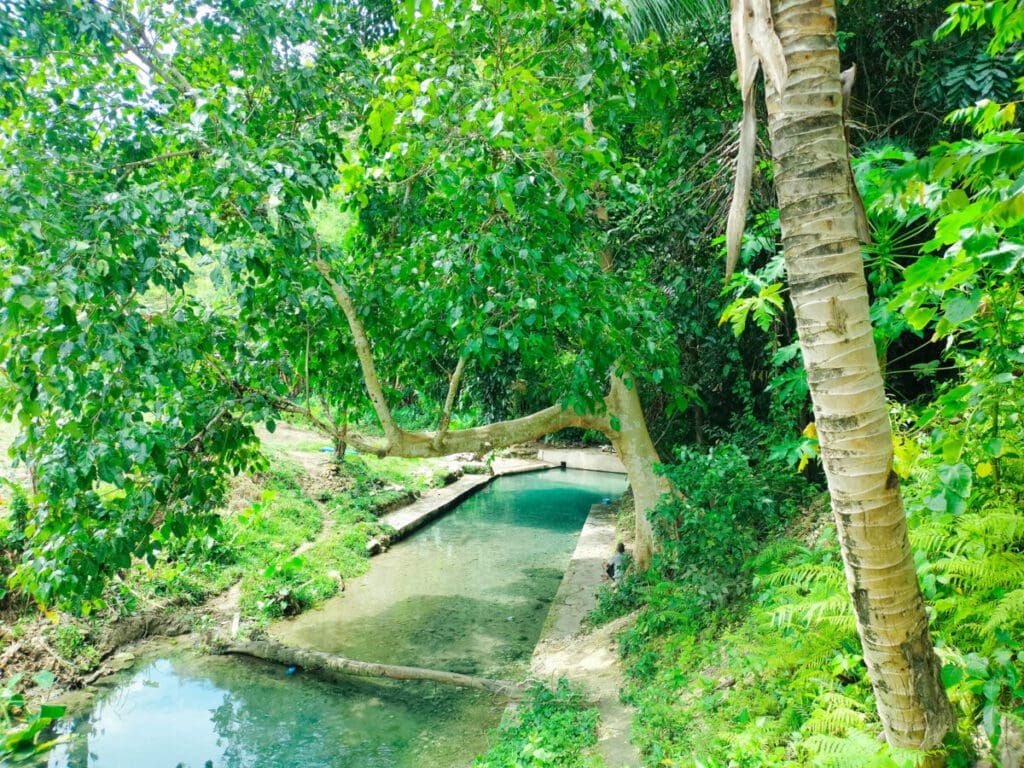
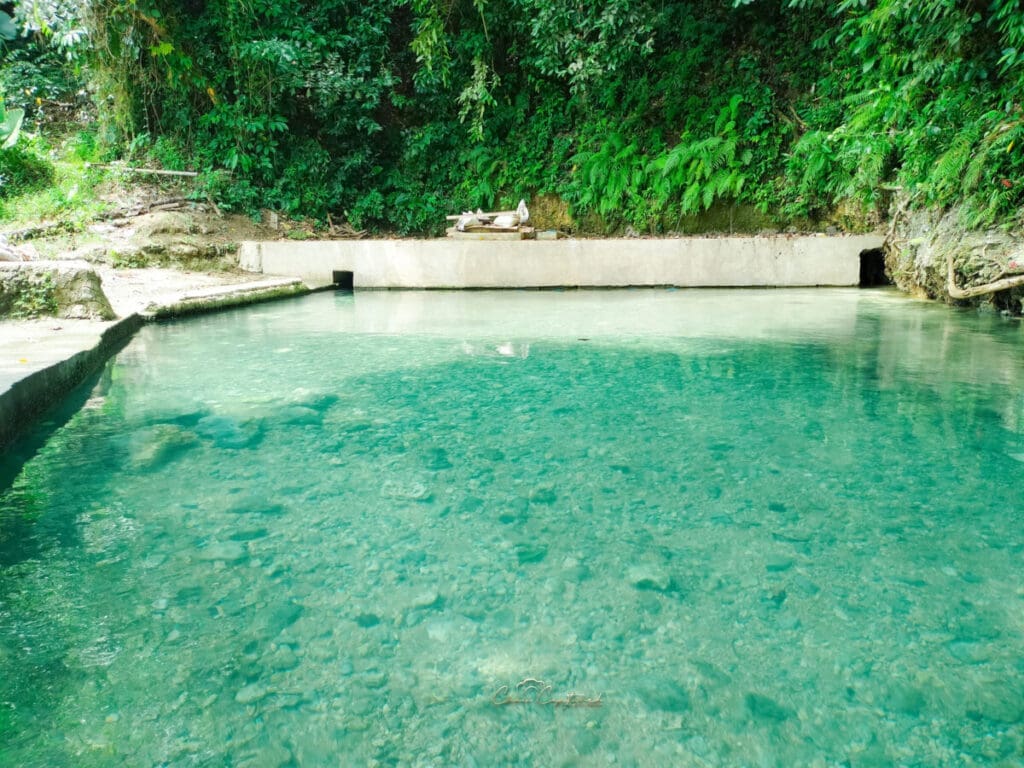
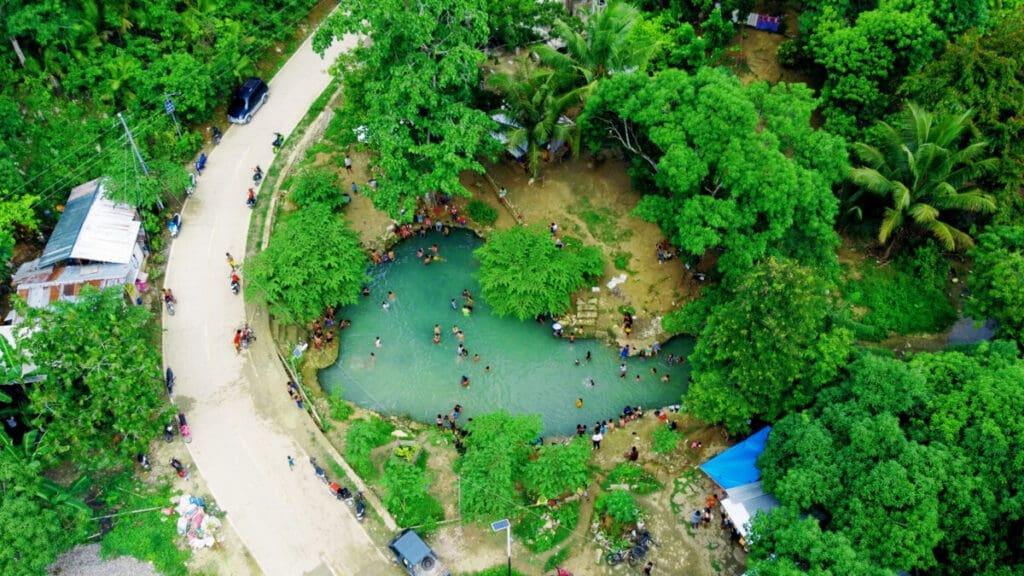
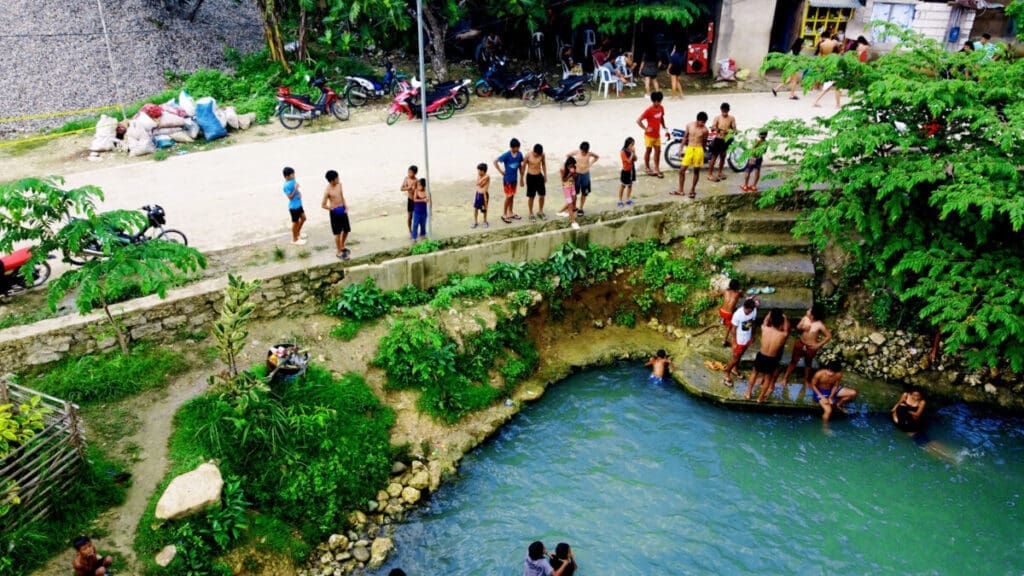
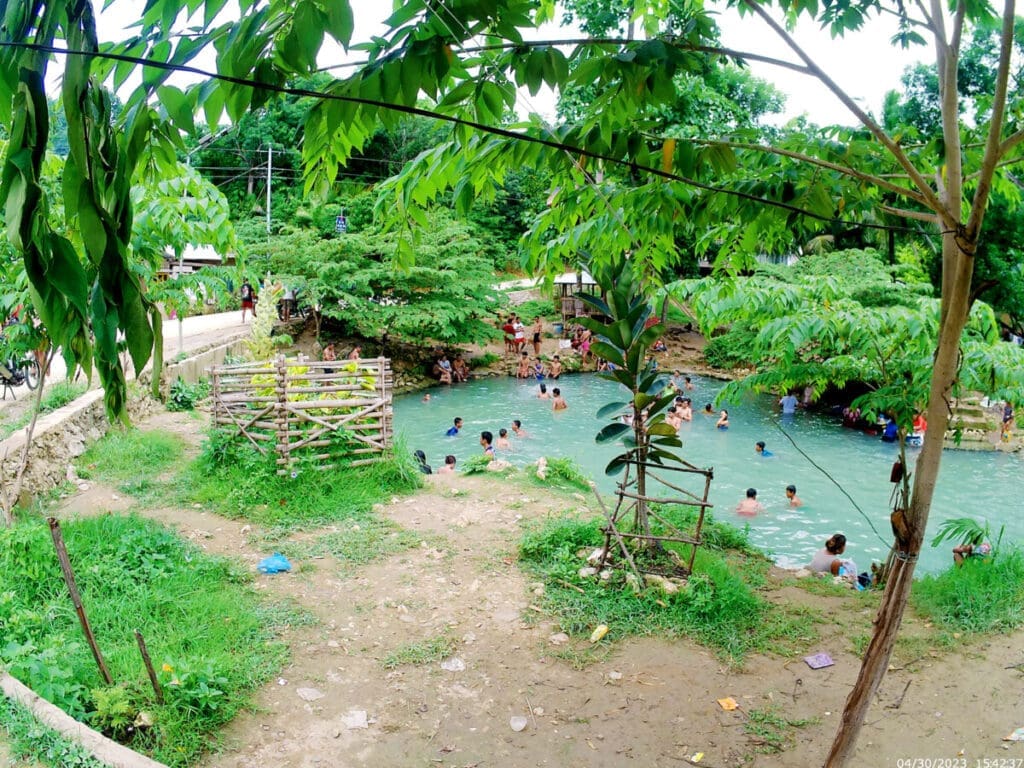
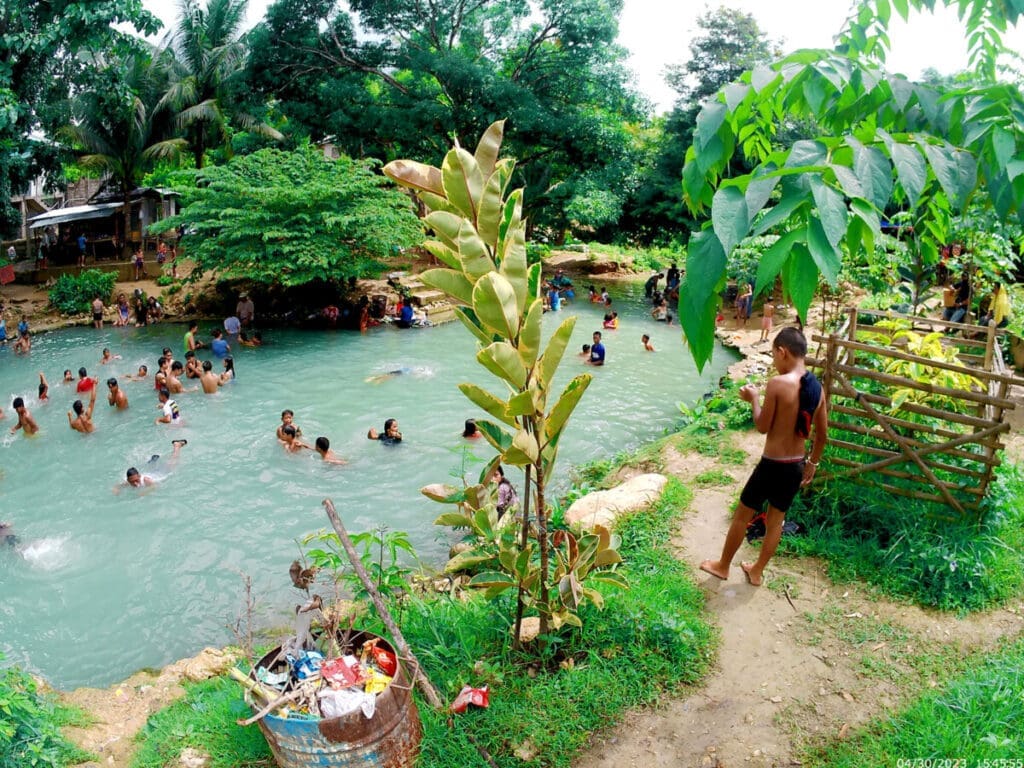
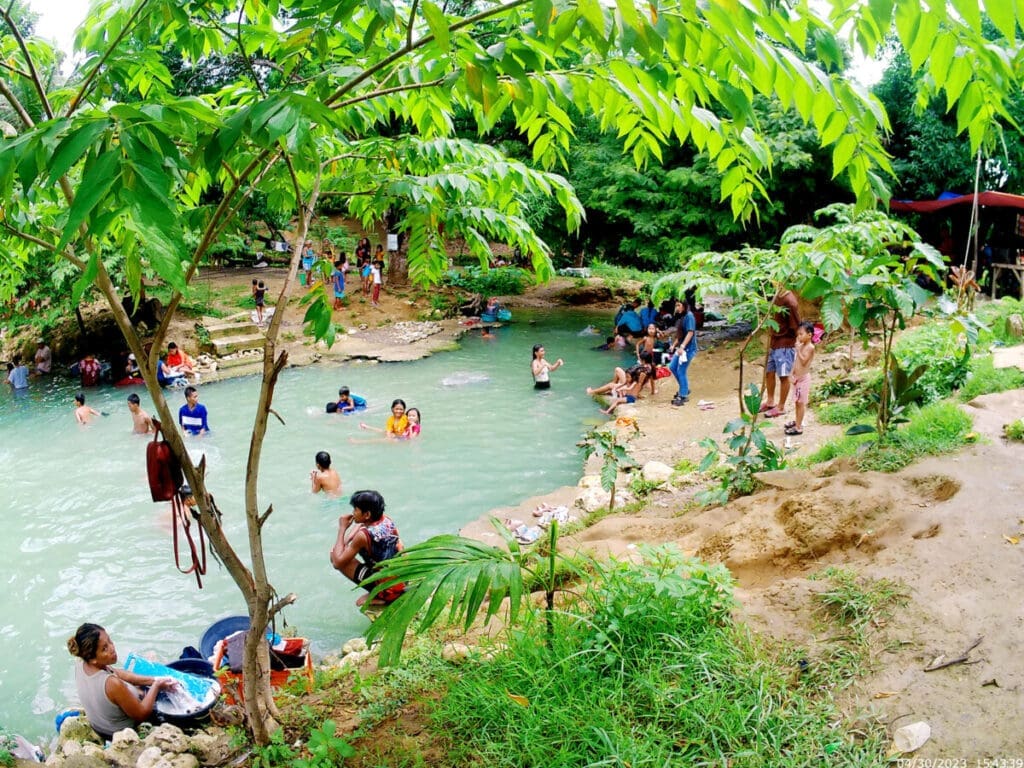
When the summer sun gets unbearable, nothing beats cooling off in a natural spring. Cantacoyan Spring, found right beside Cantacoyan Bridge along Tabuelan–Junction Lugo Road, is one of Tabuelan’s haven.
Unlike popular resorts, this spring stays simple and authentic, no gates, no commercial setup, and best of all, no entrance or corkage fee. It’s just pure nature waiting for anyone who wants to take a refreshing dip. The spring’s clear waters have been a go-to spot for locals, and now, more and more travelers are discovering it as a budget-friendly escape.
Nature’s Cold and Crystal-Clear Refreshment
Photo from MUDMAX CAMPERS
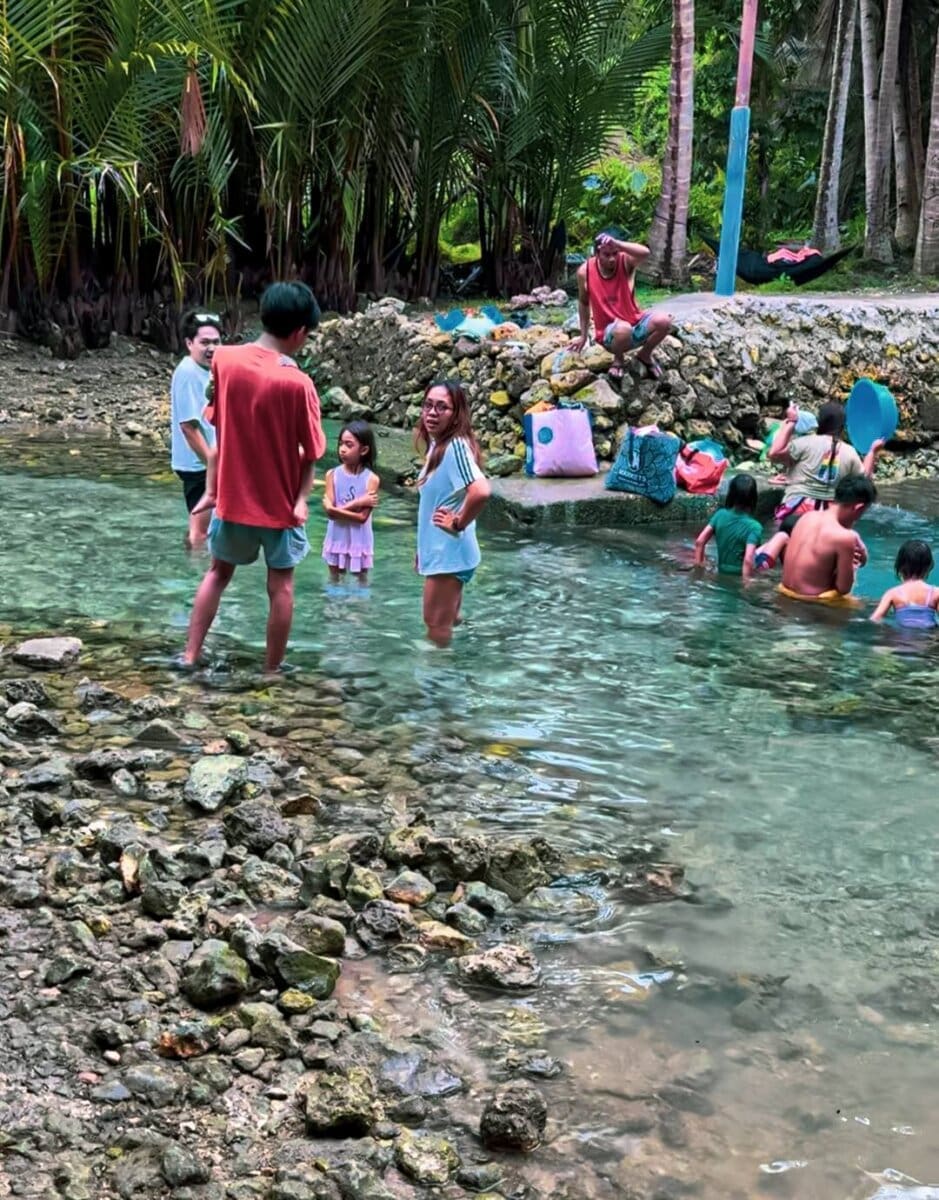
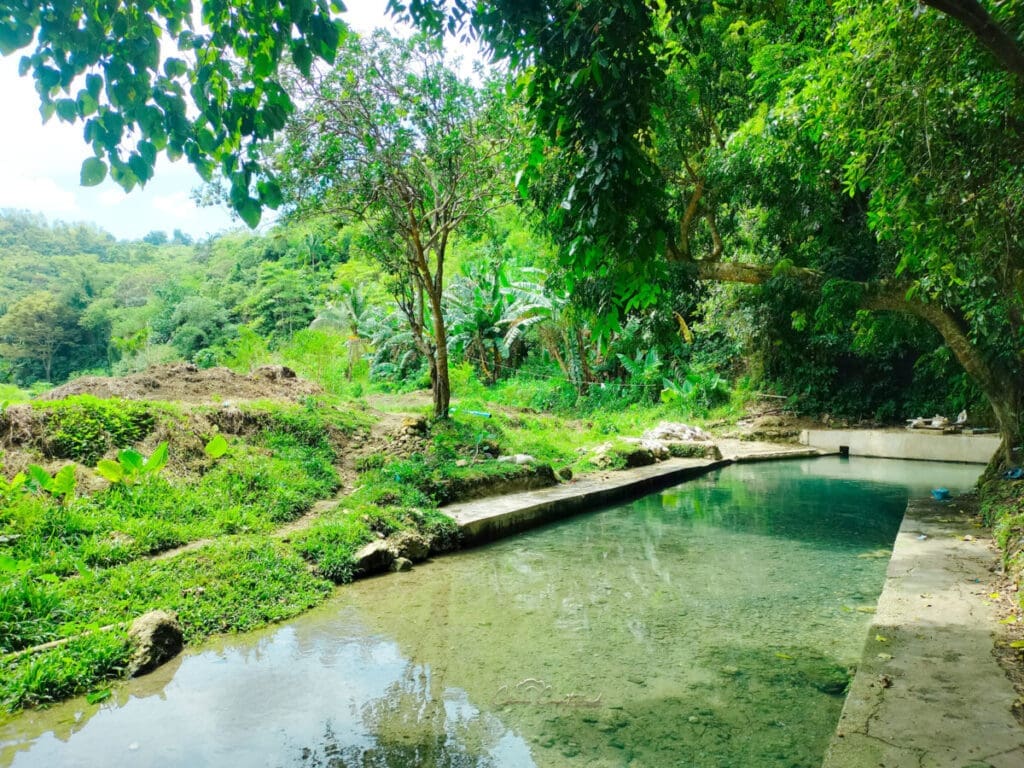
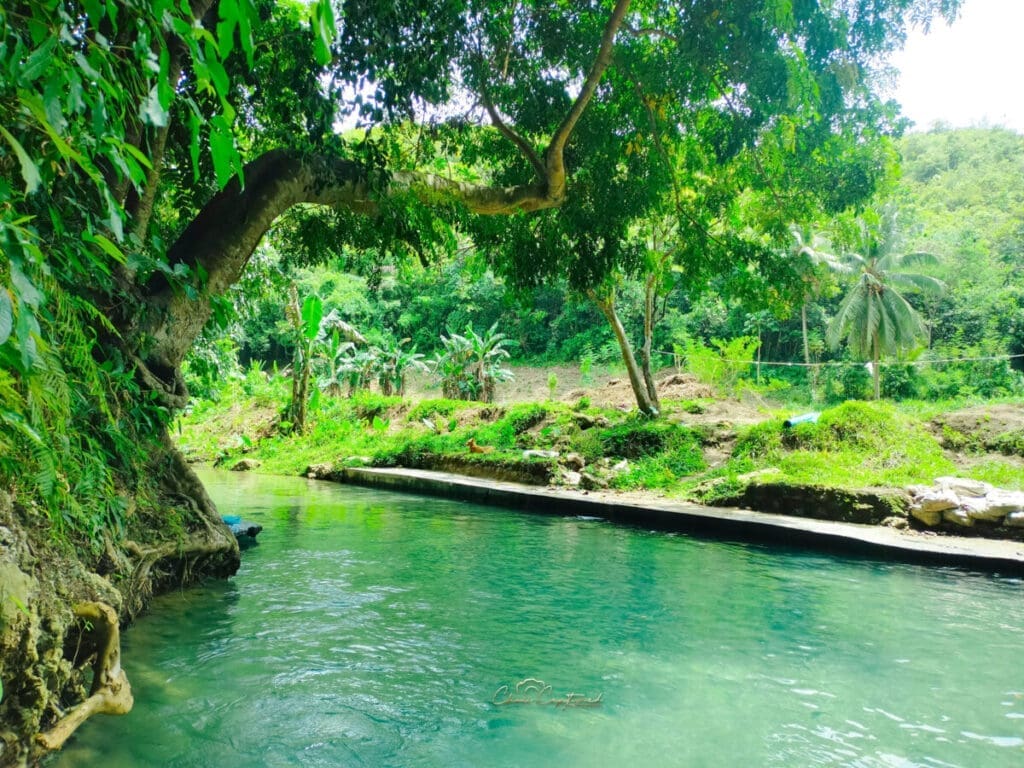
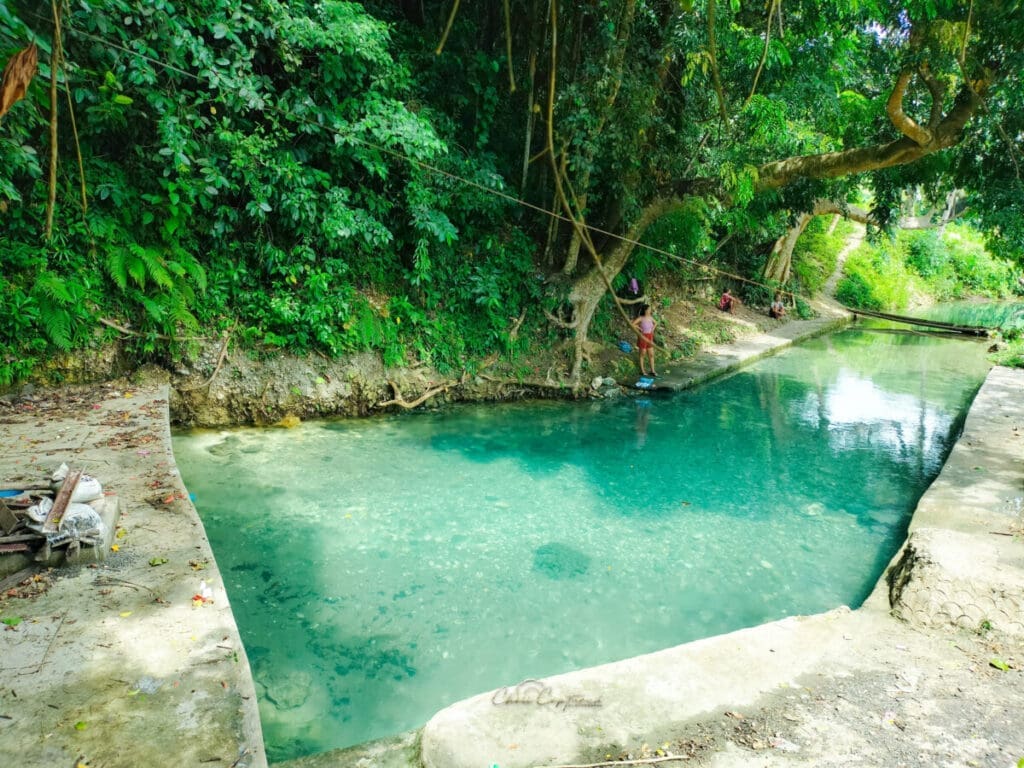
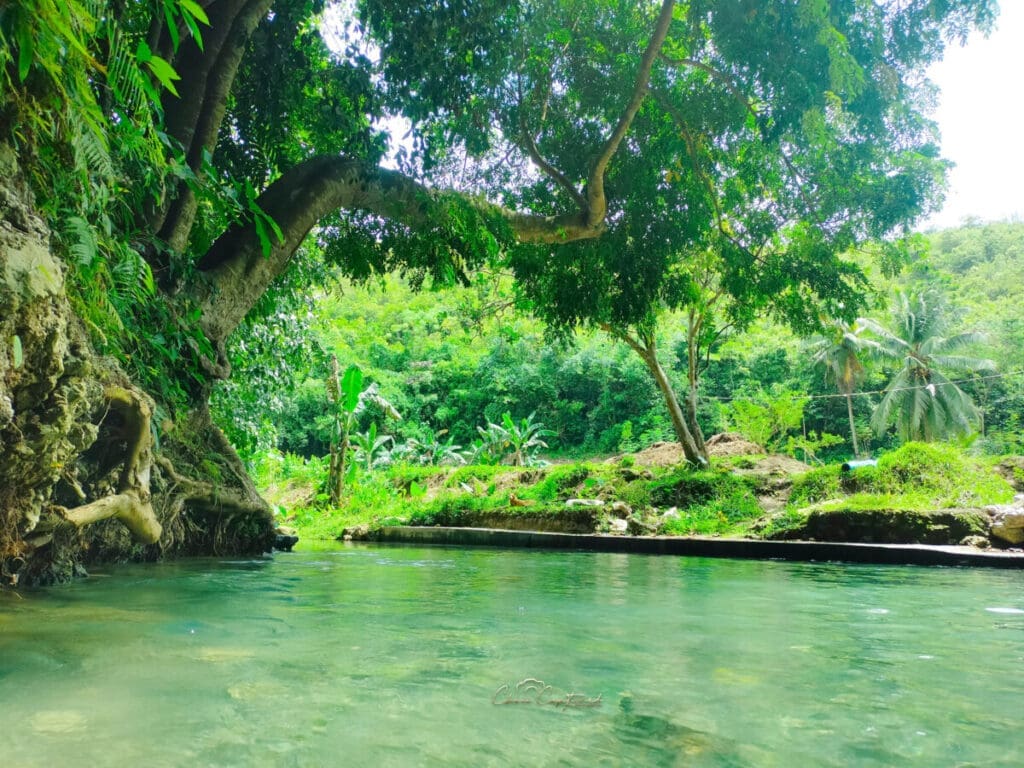
What makes Cantacoyan Spring special is its ice-cold, crystal-clear water that flows endlessly even in the hottest months. The place is surrounded by trees, giving visitors a shady retreat from the heat. It’s a simple swimming spot, no fancy cottages or big resorts, just a natural spring where you can fully relax. Families often come here for a quick swim, while some locals use the water for washing clothes.
The area is also breezy, making it perfect for picnics. Since there are only small stores nearby selling snacks, it’s best to bring your own food and drinks if you plan to stay longer. You can also bring mats, camping chairs, or portable tables since there are no cottages provided.
Travel Tips Before You Go
Photo from MUDMAX CAMPERS
A trip to Cantacoyan Spring is best enjoyed when you come prepared. Since the place does not collect any entrance fee, it is important to be a responsible visitor and clean as you go to help maintain the natural beauty of the spring. The area does not have cottages for rent, so bringing your own mats, chairs, or picnic gear is highly recommended. Small sari-sari stores nearby sell snacks, but for those planning to stay longer, it is better to bring full meals and drinks to enjoy by the water.
Parking is available for both motorcycles and cars, making it hassle-free for road trippers. Mobile signal can be weak in some parts of Tabuelan, so don’t expect strong reception and instead take it as an opportunity to enjoy a short digital detox.
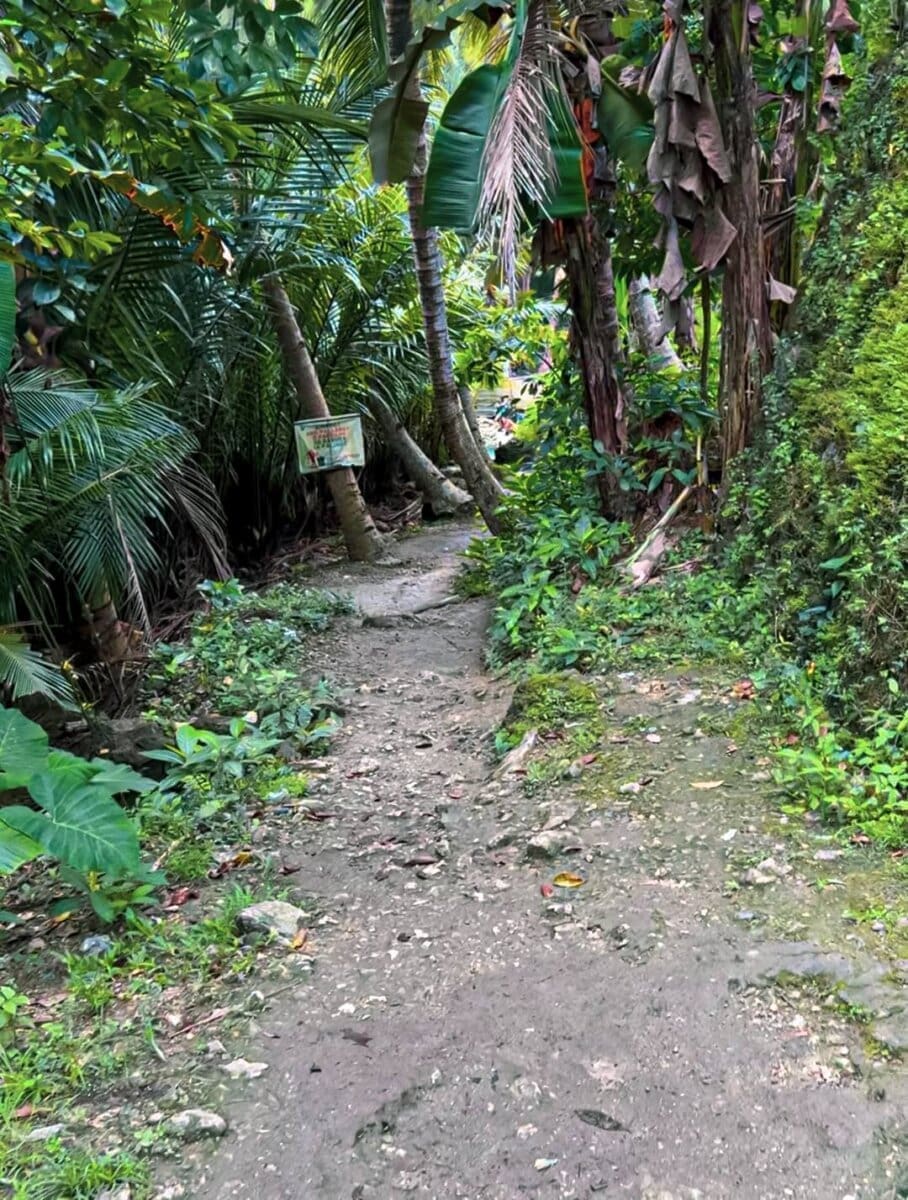
By Car: Driving to Cantacoyan Spring is a road trip in itself. From Cebu City, you can either take the North Coastal Road through Danao or the National Highway via Lugo. Passing by Lugo Church, just keep following the main road toward Tabuelan until you reach Cantacoyan Bridge. Right before the bridge, look out for the signage pointing to the spring on the left side, it’s easy to spot if you drive slowly. From the signage, you’ll need to walk for about two to three minutes along a tree-covered path before you see the spring. The drive usually takes three to four hours, depending on traffic and stopovers. Parking won’t be a problem since there’s ample space for both cars and motorcycles.
By Commute: Head to the North Bus Terminal in Cebu City and ride a bus bound for Tabuelan via Lugo. Ask the conductor to drop you off at Cantacoyan Bridge, drivers and conductors are usually familiar with the spring. Once you get off, you’ll see the signage leading to the spring on the left side of the bridge. From there, it’s just a short two to three minute walk through a shaded, breezy trail. The walk itself adds to the charm of the trip, as you’re immediately greeted by greenery and the sound of flowing water before you even reach the swimming spot.
Photo from MUDMAX CAMPERS
Tabuelan may not be the first place that comes to mind when planning a summer outing, but springs like Cantacoyan prove the town is overflowing with natural treasures. In fact, some travelers even stumble upon other nearby springs like Liki Spring, showing just how blessed this town is with freshwater sources. Whether you’re out with family, friends, or just looking for a solo adventure, Cantacoyan Spring is a spot you’ll want to return to again and again. Affordable, refreshing, and absolutely beautiful, this little pocket of nature is definitely worth the long drive north.
Located in Brgy. Bongon, Tabuelan, Bongon Spring is an attraction that invites travelers to pause and take a dip in its crystal-clear waters. The spring is small yet refreshing and flowing quietly under the shade of tall trees.
Its calm nature makes it a peaceful stop for anyone looking to cool down during a long drive up north. What makes it even better is that there is no entrance fee, making it an accessible and budget-friendly destination.
Photo from Choii captured
What to Expect
Photo from Choii captured
The moment you arrive, the first thing you’ll notice is the cold, clear water flowing freely from the spring. Its simplicity is part of its beauty, no fancy amenities, no crowds, just the relaxing sound of flowing water and the cool embrace of nature. Locals often stop by for a quick dip, and travelers passing through Tabuelan find it an ideal place to rest and recharge before heading to other tourist spots in the area.
Photo from Choii captured
Travel Tips
Photo from Choii captured
The best time to visit Bongon Spring is in the morning or late afternoon when the sun isn’t too harsh. Since the spring is right along the road and does not have commercial facilities, it is wise to bring your own snacks, drinks, or mats if you plan to stay for a while. As with all natural attractions, leave no trace behind, help keep the spring clean and preserve its simple, natural beauty for visitors.
By Car: If you’re driving from Cebu City, the most recommended route is through the Transcentral Highway via Busay and Balamban. The drive takes around three hours and offers a scenic journey through rolling hills and mountain views. Once you reach the town proper of Tabuelan, you can simply pin “Bongon Spring” on Google Maps or ask locals for directions. Since the spring is located right along the road in Brgy. Bongon, it is easy to find and access even without a guide.
By Commute: For those commuting, there are two convenient options. From the North Bus Terminal, you can ride a bus bound for Tabuelan via Tuburan, which costs around ₱160 to ₱200 and takes three to four hours. From the Tabuelan bus terminal, take a habal-habal (motorbike taxi) to Brgy. Bongon where the spring is located. Another option is to ride a V-hire from Ayala Center Terminal bound for Tuburan, with a fare of about ₱200 one way. From Tuburan, transfer to a habal-habal going to Tabuelan and ask the driver to drop you off at Bongon Spring.
“Sometimes it’s the tiniest details that make the loudest statements.”
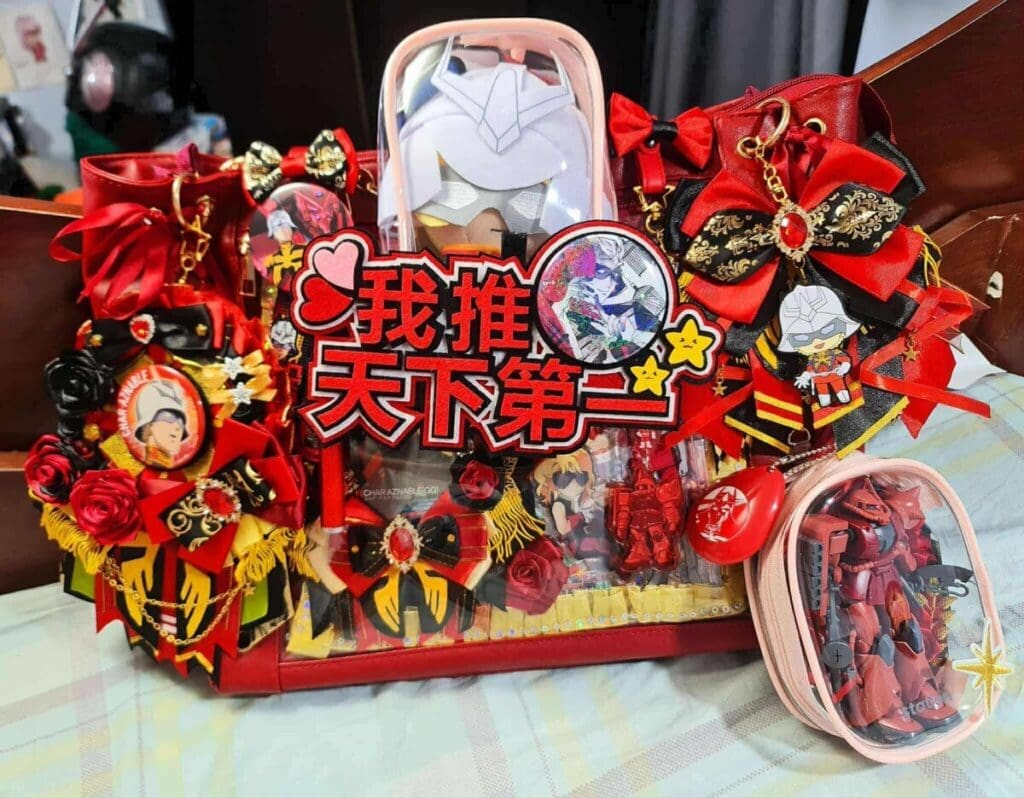
If you’ve noticed people’s bags jingling like wind chimes or water bottles looking more dressed up than the owners themselves, you’re not imagining it. The streets, the cafés, and especially TikTok feeds are buzzing with the return of anik-anik, that Filipino catch-all term for little trinkets, dangling accessories, and quirky add-ons that serve no real purpose other than to make life a little brighter. What was once a random assortment of knickknacks has now evolved into a full-blown aesthetic.
Photo from Bea Umacob
From Street Stalls to Style Staples
Photo from Gwyneth Cantillas
In the Philippines, anik-anik has always been part of everyday life. Street stalls in Divisoria, night markets in Cebu, or the counters of neighborhood sari-sari stores are filled with keychains, beads, plastic charms, and pins that cost as little as five pesos. They were often impulse buy “just because” or gifts from a friend, a keepsake from a trip, or even a freebie from fast-food chains. For years, these tiny objects were dismissed as clutter, the kind of thing parents would roll their eyes at and say, “Anik-anik lang ‘yan.”
But today, these little pieces of plastic, resin, and fabric have transformed into curated expressions of identity. What was once cheap filler is now part of a cultural movement, proof that fashion is not just about clothes, but about the small, playful details that make you unique.
Photo from Robyn Piper Del Rosario
The Y2K Comeback Effect
Photo from Ricca Palmer
It’s no coincidence that anik-anik resurfaced alongside the Y2K revival. The early 2000s were defined by maximalism, and nothing screamed “2003” more than phones covered in dangling straps, beaded charms, and sparkly baubles. That aesthetic has made a roaring comeback on TikTok and Instagram, where Gen Z reimagines the look with a modern twist.
Phone straps today are braided with names, cartoon figurines, or pastel beads. Tote bags are decorated with plushies clipped like trophies. Even water bottles are personalized with dangling resin charms. In an era obsessed with curating personal identity, these trinkets shout individuality louder than branded sneakers or designer watches ever could.
Small Joys in Big Times
Photo from Robyn Piper Del Rosario
Beyond fashion, anik-anik speaks to something deeper. Psychologists suggest that small objects bring comfort and nostalgia. They remind us of childhood, of simpler times, of things that once made us smile. In a world where young people are navigating economic struggles, pandemic aftershocks, and digital exhaustion, something as tiny as a keychain can spark a moment of joy.
There’s also the collector’s thrill. Hunting for a rare fast-food toy at a weekend market or scoring a handmade resin charm from a local seller scratches the same itch as sneaker collecting, but in a cuter, quirkier, and more accessible way. Each piece tells a story, whether it’s a gift from a best friend, a souvenir from a concert, or a DIY project made late at night.
Going Viral, One Charm at a Time
Photo from Bea Umacob
The digital world supercharged the trend. On TikTok, “What’s in my bag?” videos are practically showcases of anik-anik, with trinkets often stealing the spotlight from the actual items inside. Instagram feeds are filled with close-up shots of beaded straps, crochet fruits, and enamel pins carefully arranged on totes and jackets. The uniqueness of each collection fuels engagement: the rarer and quirkier the trinket, the more likes it racks up.
From Divisoria to the Runway
Photo from Ysabelle Leonardo
What began in sidewalk stalls has now climbed to the runway. International fashion houses like Prada and Marc Jacobs have leaned into charm culture, while local Filipino designers are experimenting with dangling embellishments in streetwear and accessories. Independent artisans, meanwhile, are carving out niches online by selling handmade beaded straps, crocheted mini plushies, and resin charms. The anik-anik once dismissed as cheap clutter now holds its place in both luxury fashion and grassroots creativity.
Will It Last?
Photo from Gwyneth Cantillas
Like all trends, anik-anik may fade, but its spirit feels timeless. People will always crave personalization, especially in a world that mass-produces everything. Trinkets are accessible, affordable, and endlessly customizable. No two collections are ever the same, and that uniqueness is what makes them special.
Filipinos, after all, have always embraced kaartehan, the playful, sometimes over-the-top flair that makes even ordinary objects feel extraordinary. And as long as people continue to clip, dangle, and bead their way through daily life, the age of anik-anik will keep swinging strong.
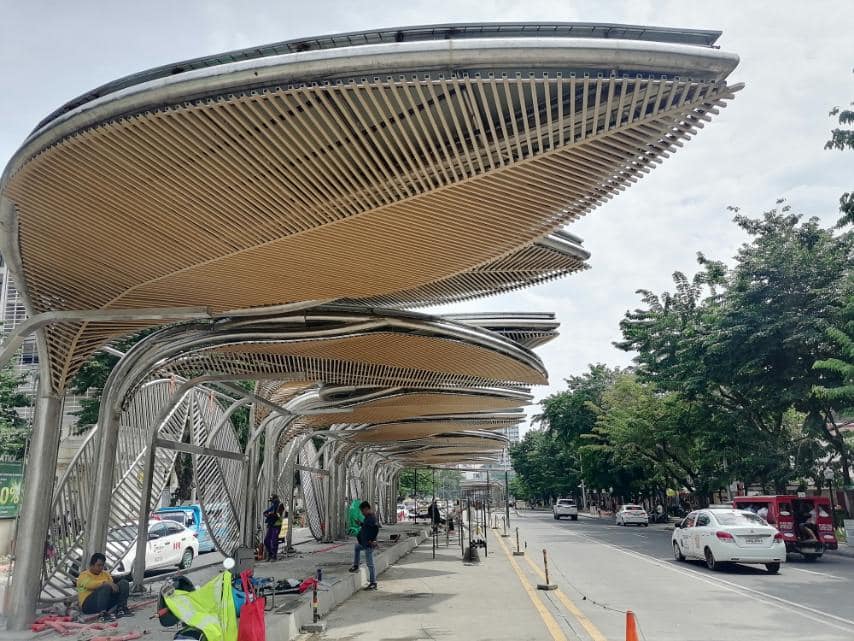
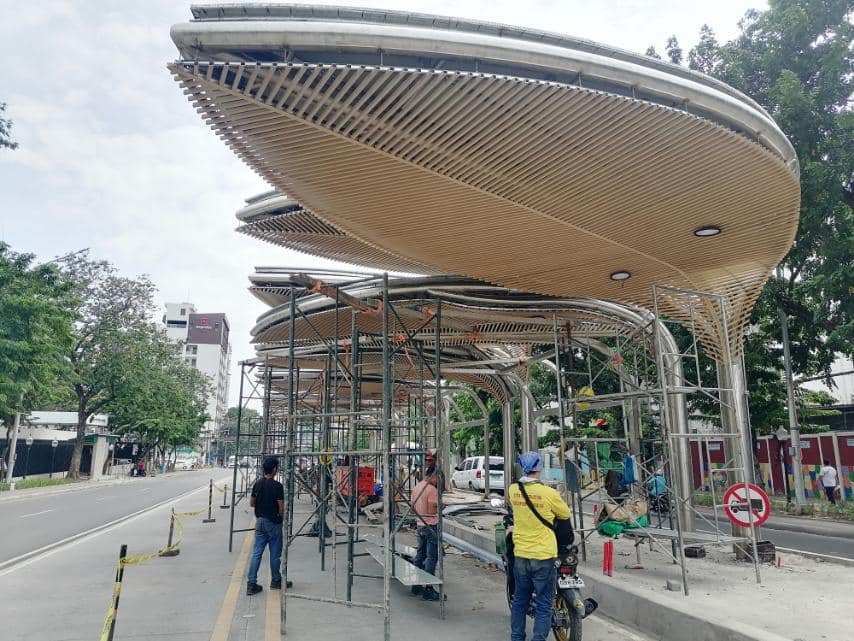
After years of waiting, countless debates, and more than a few roadblocks, Cebu is finally about to see its first taste of the Cebu Bus Rapid Transit (CBRT) system.
Starting September 17 to 25, 2025, the CBRT will conduct a test run of its initial phase, with buses ferrying passengers from Ayala Center Cebu to Il Corso at the South Road Properties (SRP).
The dry run is designed to check operations, gather feedback, and spot problem areas before national officials get a first-hand look at the system on September 25.
A Long Time Coming
Photo from Cebu Bus Rapid Transit
The CBRT has been in the works since the 1990s but has faced decades of delay due to political changes, property disputes, and heritage concerns. Now, Cebu City is finally seeing movement.
Mayor Nestor Archival underscored the importance of pushing forward, calling the CBRT a “major infrastructure investment backed by extensive studies.”
He also admitted that public perception could make or break the project. Negative feedback, he warned, could affect funding for future stages, even if initial support is already secured.
What to Expect
Photo from Cebu Bus Rapid Transit
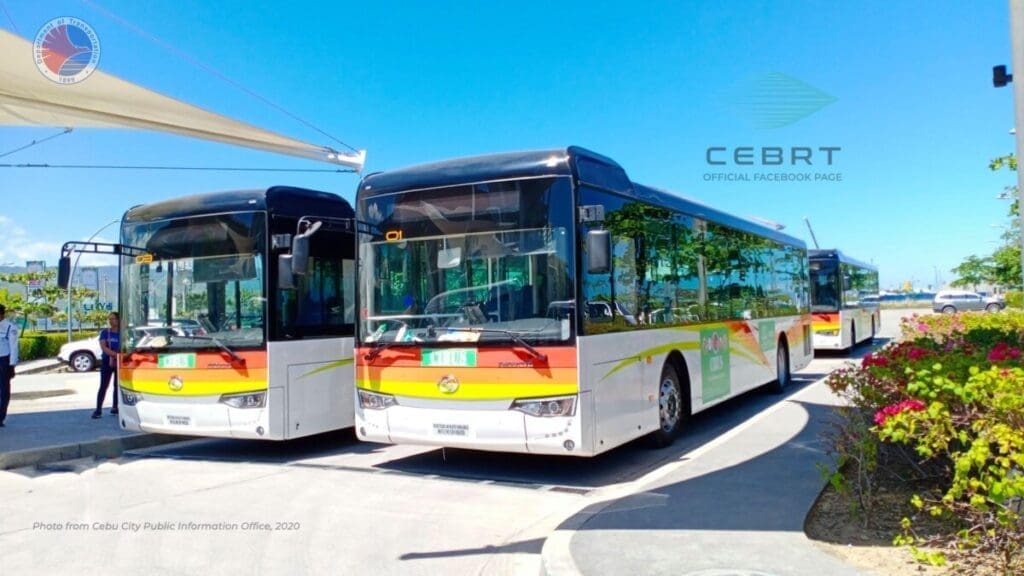
The Department of Transportation (DOTr) is leading the project, with Cebu Interim Bus Service (Cibus) of Ceres Bus supplying the units.
• 10 buses will start rolling out on September 15, with 17 units prepared in total.
• The route: Ayala Center Cebu – SRP (Il Corso).
• Traffic personnel from the Cebu City Transportation Office (CCTO) will be deployed to help manage congestion during the run.
Cibus isn’t a stranger to Cebu commuters, it has been serving routes since 2020 to help locals get used to the system.
What’s Next for Cebu?
Photo from Cebu Bus Rapid Transit
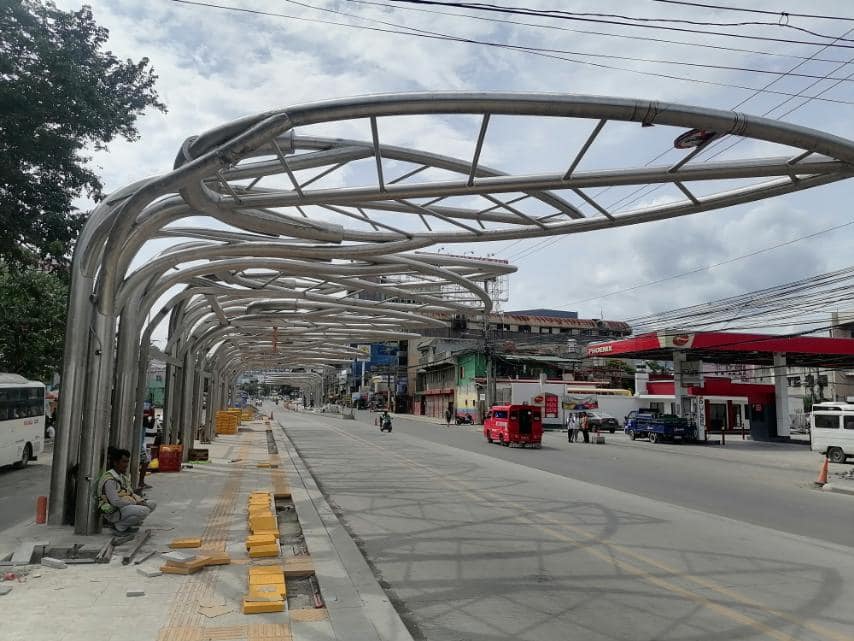
If successful, the CBRT could give Cebu a modern, sustainable alternative to daily traffic woes. The full system will stretch 13 kilometers, with 17 stations, a depot, and a terminal connecting major roads from SRP to Ayala Center Cebu. Completion is targeted by 2026.
Still, officials admit the shift won’t be painless. Private vehicles might experience added congestion at first. But the long-term payoff, they argue, is worth it.
Mayor Archival appealed to residents to “give the project a chance”, reminding Cebuanos that meaningful change always comes with adjustments.
Why This Matters
Photo from Cebu Bus Rapid Transit
Cebu’s roads are bursting at the seams, with traffic only getting worse each year. The CBRT could finally give commuters a faster, more organized, and more sustainable option. But for it to succeed, it needs not just buses and stations, it needs Cebuanos’ trust and support.
As the city counts down to September 17, all eyes will be on the buses gliding through Cebu’s streets. After decades of waiting, could this be the first step toward a traffic solution that actually works?
What do you think, Sugboanons? Will you be hopping on the CBRT once it officially launches?
Nearly four in ten Filipino adults are now considered obese, according to new findings presented at the first Obesity Collaborative Summit held at Makati Life Medical Center.
This marks a dramatic increase from earlier estimates, which placed the country’s obesity prevalence at just 10 percent. The shift reflects the adoption of new, lower body mass index (BMI) thresholds for Asian populations, who face higher risks of complications such as diabetes and heart disease even at lower weights.
Obesity is not a simple matter of overeating. Studies show that up to 70 percent of the condition can be inherited, making many Filipinos genetically predisposed to gain weight more easily than others. This genetic vulnerability combines lifestyle and environment to create an even greater risk.
When Food is Culture
Photo from Unsplash
Filipino life revolves around food, from family reunions to neighborhood gatherings, and celebrations are rarely complete without a feast. But this cultural strength also poses a challenge. Affordable and accessible options are often processed or unhealthy, while fresh and nutritious food can be scarce in many communities, especially in urban centers.
The country’s environment makes staying active difficult. Few parks, limited walkable spaces, and safety concerns discourage outdoor activities. With little room for exercise in daily life, many Filipinos find themselves stuck in sedentary routines. Advocates are pushing for legislation to create safer, more accessible public spaces that encourage movement.
Health leaders are urging Filipinos to rethink the way they view obesity. It is increasingly recognized as a chronic, relapsing disease, not a personal failing. Addressing it requires systemic changes in healthcare, urban planning, and food access, rather than placing the burden solely on individuals.
To respond to the growing crisis, Makati Life Medical Center announced a comprehensive obesity care program in partnership with the Makati City government. The initiative integrates medical treatment, nutrition counseling, and long-term management to support Filipinos in achieving healthier lives.
The rising prevalence of obesity highlights the urgent need for a national shift in how the condition is understood and treated. Combating it will ease the strain on families, reduce the pressure on the healthcare system, and create a future where health and well-being are better supported across the Philippines.
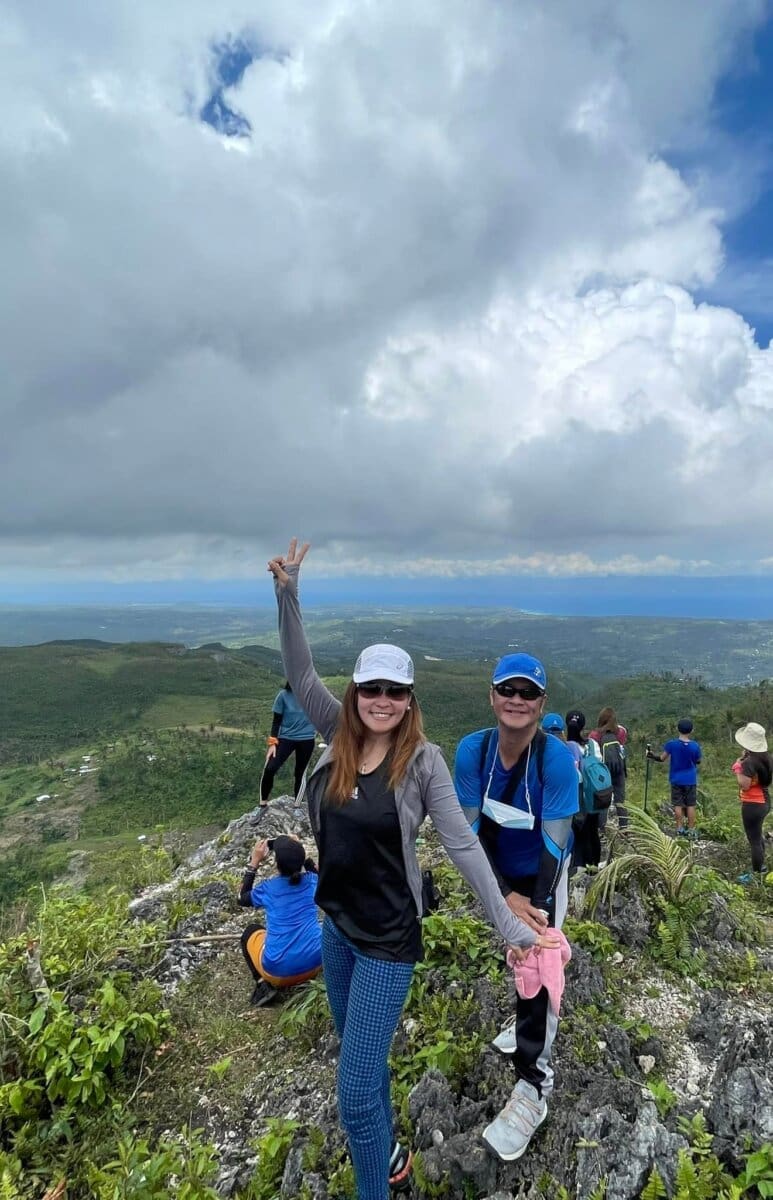
Mount Lanhan Peak is a newly discovered hiking destination that has quickly captured the attention of adventure seekers. Its raw trails and charm offer a medium-level trek that even first-time hikers can conquer. The climb usually takes around forty-five minutes to an hour, depending on one’s pace, and at the summit, a breathtaking view awaits. From the top, you can marvel at the sight of Negros, Bohol, and Cebu City, while on certain mornings, you may even witness the enchanting sea of clouds.
Sunrise, Sunset, and the Sea of Clouds
Photo from Sofia Jasmine
The beauty of Mount Lanhan lies in its beauty from dawn to dusk. Early risers are rewarded with a glowing sunrise that slowly unveils the landscape, while those who linger until late afternoon are treated to a golden sunset casting vibrant colors across the horizon. On clear days, the horizon stretches endlessly, making it one of the best places to pause and take in the wonders of nature.
No Entrance Fee, Just Pure Adventure
Photo from Evangeline Cortes
One of the unique features of this mountain is that it does not require an entrance fee. This makes it an ideal destination for budget-friendly trips, whether for solo adventurers or groups of friends. Since vendors are far from the area, trekkers need to bring their own water, food, and other essentials before starting the journey. With its natural state preserved, the mountain invites visitors to follow the principle of leaving no trace to protect and respect its environment.
The Local Hospitality
Photo from Evangeline Cortes
A visit to Mount Lanhan is made even more memorable by the warmth and friendliness of the locals. Residents of Basak are known for their hospitality and are always willing to guide visitors to the trailhead or even accompany them along the way. This sense of community not only ensures safety for trekkers but also adds to the overall charm of the experience, making it feel like more than just a climb but also a cultural encounter.
How To Get There
Location: Basak, Sibonga, Cebu
By Car: Head south from Cebu City along the Cebu South Road. From Sibonga proper, the route continues toward Barangay Basak, where the residence of Betty or Toper Abellana is known by locals as the reference point for the starting trail.
By Commute: Ride a Ceres bus or a minibus bound for Sibonga and alight in front of Sibonga Church. From there, a short ride on a sika or pedicab will bring you to Acacia Habal-Habalan. At this point, a habal-habal (motorbike taxi) can take you to Barangay Basak with a stop either at the Abellana residence or directly at the foot of Mount Lanhan. The fare for the ride is around seventy pesos each way. From the drop-off point, the trek to the summit begins.
Photo from Sofia Jasmine
Mount Lanhan remains a hidden treasure waiting to be explored. Its raw beauty, untouched trails, and welcoming locals make it a destination worth visiting for those who seek peace and adventure. With no entrance fee, it offers a rare chance to enjoy nature without the distraction of commercialization. However, its delicate environment is also a reminder for everyone to be responsible trekkers. Bringing enough supplies, respecting the mountain, and leaving no trash behind are small yet meaningful ways to ensure that this newfound gem in Sibonga will continue to inspire future explorers.
Mantayupan Spring, locally known as Tubod, is the life-giving source that feeds the famous Mantayupan Falls. Unlike the thundering falls downstream, the spring offers a gentler charm. Its clear, bubbling waters emerge from the earth, winding their way through greenery before eventually diving into the towering waterfalls below. Standing by the spring, one can feel the quiet power of nature at its very beginning, a reminder that great rivers and falls are born from small yet mighty sources.
Scenic Beauty and Natural Atmosphere
Photo from Pobreng Adventurista
The Mantayupan Spring is set against a backdrop of thriving vegetation and cool mountain air. It is not as crowded as the falls, which makes it ideal for travelers seeking peace and quiet. In the early hours of the day, the sunlight filters through the trees and dances on the rippling surface of the spring, creating an enchanting spectacle. The surroundings are alive with the songs of birds and the rustle of leaves, turning a visit into a soothing escape from urban life.
Experiences at the Spring
Photo from Pobreng Adventurista
Visitors to Tubod can enjoy the refreshing waters in a more intimate setting than the buzzing falls below. It is a perfect spot to soak your feet, relax by the water’s edge, or simply meditate to the gentle sound of flowing currents. Adventurous souls can follow trails that connect the spring with nearby viewing points, offering glimpses of the larger Mantayupan Falls in the distance. For families and groups, the spring is also an inviting spot to gather, share a meal, and savor the atmosphere of nature’s quiet beginnings.
Local Insights for Travelers
Photo from Pobreng Adventurista
The charm of Mantayupan Spring is best experienced in the morning when the environment is calm and the water reflects the freshness of the new day. Many locals recommend bringing your own food and enjoying a simple picnic by the banks, as it allows you to linger longer in the area. Comfortable footwear is essential for navigating the damp trails, and a camera is always worthwhile, every ripple of water and every shaft of light makes for a striking photo.
How To Get There
Location: Barili, Cebu, Philippines
By Car: From Cebu City, drive south through the South Coastal Road (SRP) toward Carcar City, then continue your journey to Barili town proper. From there, road signs will guide you to the spring, which lies close to the famous Mantayupan Falls. The trip usually takes two to two and a half hours, depending on traffic conditions.
By Commute: Ride a bus at Cebu South Bus Terminal. Buses bound for Barili are available throughout the day and usually take two and a half to three hours. Once you arrive at Barili town proper, hire a habal-habal (motorcycle taxi), to take you to Mantayupan Spring. The short ride is an adventure in itself, offering sweeping views of the countryside before you arrive at the blue waters that serve as the very source of the grand falls.
Photo from Pobreng Adventurista
While the falls capture much of the spotlight, the spring holds its own quiet magic. It is the source of Mantayupan’s beauty, the place where rushing waters first see the light of day. Visiting Tubod allows travelers to appreciate not only the spectacle of the falls but also the humble yet powerful spring that sustains it. To sit by its clear waters is to witness the beginning of a journey that culminates in one of Cebu’s greatest natural wonders.
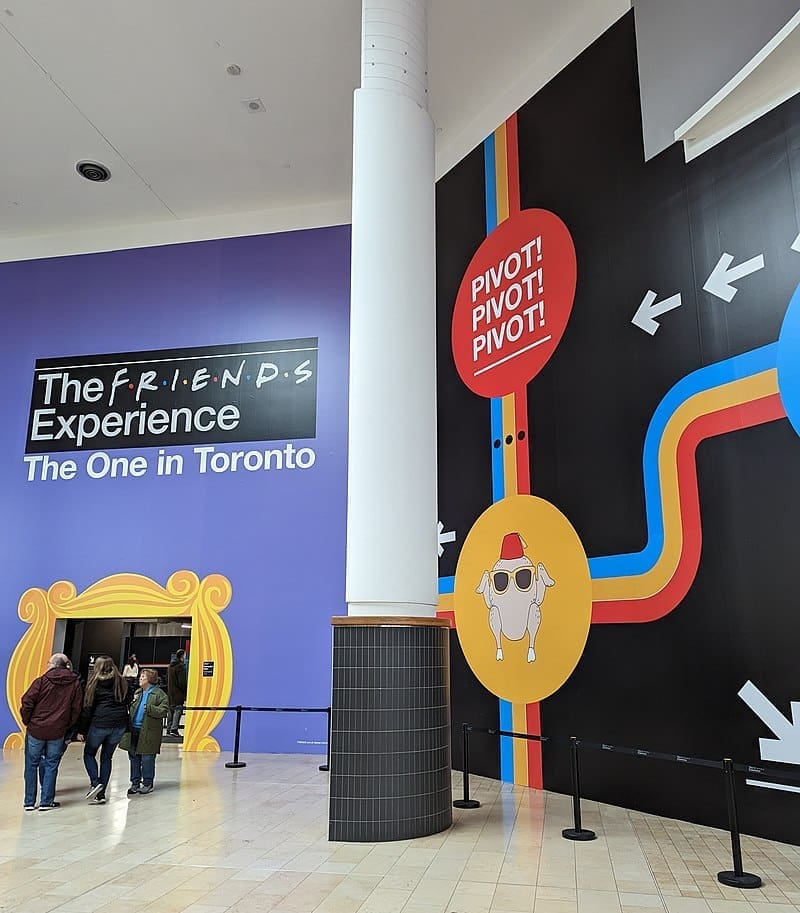
Could we BE any more excited? Filipino Friends fans just got the tease of a lifetime. On Facebook, The FRIENDS Experience, the global, nostalgia-fueled exhibition that transports fans straight into the world of the beloved 90s sitcom, dropped a cryptic post showing the iconic orange Central Perk couch in some of the Philippines’ most famous landmarks.
Adding fuel to the excitement, GMG Productions, the powerhouse that brought Hamilton and Dear Evan Hansen to Manila, shared the teaser as well. That’s right, these are the same folks known for staging international cultural juggernauts. If anyone can make Friends happen here, it’s them.
Photo from Wikipedia
What’s in Store for Fans?
Photo from Wikipedia
The FRIENDS Experience isn’t just a photo op, it’s a full-on immersion into sitcom history. The exhibit has already traveled across the United States, Canada, the United Kingdom, France, Australia, Spain, Brazil, Belgium, the Netherlands, and more. Everywhere it goes, it sells out.
Inside, fans step into painstakingly recreated sets such as Joey and Chandler’s quirky apartment, Monica’s purple-walled living room, the ever-cozy Central Perk, even the Las Vegas wedding chapel. Scattered throughout are original props and costumes that have become TV legend like the infamous “pivot” couch, Joey’s Hugsy the penguin, Phoebe’s Supergirl getup, and Ross’s unforgettable holiday armadillo suit.
Why Friends Still Matters
Photo from Wikipedia
Friends is a cultural touchstone. For ten seasons, Jennifer Aniston, Courteney Cox, Lisa Kudrow, Matt LeBlanc, David Schwimmer, and the late Matthew Perry brought to life six New Yorkers navigating their late 20s and 30s with humor, heartbreak, and an endless supply of coffee.
The love for the show is alive and well. When the cast reunited in 2021 for Friends: The Reunion, Filipino fans stayed up to stream it on HBO Go, so many, in fact, that the app briefly crashed from demand. Social media exploded with posts, proving just how deeply the series continues to resonate in the Philippines.
And now, with The FRIENDS Experience teasing its couch around our most iconic landmarks, the question is no longer if, but when.
So grab your coffee mugs, practice your best “How you doin’?”, and stay tuned. Manila might just be the next city to welcome one of the most beloved TV universes of all time.
On September 11, 911 became the only number Filipinos must remember during emergencies.
To streamline emergency response, the Department of the Interior and Local Government (DILG) has introduced Unified 911, a single hotline replacing more than 30 existing numbers throughout the country. The move fulfills President Ferdinand R. Marcos Jr.’s call under Bagong Pilipinas to strengthen community and family safety.
Ending Fragmentation, Saving Precious Seconds
Photo from Unsplash
The old system of multiple emergency hotlines often confused callers and led to delayed or inconsistent assistance. Today, Unified 911 provides a single, dependable line for all emergencies, from police and fire to medical and disaster response, seamlessly connecting to the PNP, BFP, BJMP, and LGUs.
Accessible, Free, and Inclusive
Photo from Unsplash
The service is completely free, accessible around the clock, and built to be culturally and linguistically inclusive. Operators are prepared to handle calls in Tagalog, Cebuano, Ilocano, Waray, Tausug, and other local languages so every Filipino can be understood during emergencies. The government is also aiming for a five-minute response time, with call takers trained to reassure callers with one promise, help is on the way.
More Than a Hotline, A Promise
Photo from Unsplash
More than just a technical fix, Unified 911 reflects the government’s deeper commitment to protecting families and strengthening public trust. By streamlining response and bringing agencies together, the hotline provides a concrete assurance of safety wherever Filipinos may be. The DILG underscores that Unified 911 is not only the nation’s single emergency number but also a clear promise that in times of danger, help will come.
Institutional demand for Bitcoin (BTC) cooled in August, as major firms cautiously scaled back their allocations. While institutions hesitated, retail and early-stage investors have been flocking to Bitcoin Hyper (HYPER), the fastest Layer 2 protocol built on Bitcoin.
The presale has already raised nearly $14.5 million, signaling that while some players pause, others are spotting a rare bullish catalyst with enormous potential for growth. The excitement around Bitcoin Hyper stems from its ability to bring real, utility-driven demand to the Bitcoin ecosystem.
Unlike BTC, which is primarily used as a store of value, Hyper allows developers to launch decentralized applications (dApps) that expand Bitcoin’s functionality beyond what the main chain can handle.
Investors see HYPER as a unique opportunity to capture exponential gains similar to Bitcoin’s early days, but this time backed by an ecosystem designed for active, real-world use.
Currently priced at $0.012875, HYPER’s presale window is closing soon. Once this phase ends, the token will advance to the next stage at a higher price, making now one of the last opportunities to acquire it at a rock-bottom rate.
Early participants can secure their position before major exchange demand drives the price upward, giving them a potential edge in what could become a high-volume market.
With institutional BTC accumulation slowing, CryptoQuant reports that ETFs are seeing withdrawals exceeding $1 billion in some weeks, Bitcoin remains largely a store of value rather than a utility asset.
While companies continue to hold BTC as a hedge against inflation, its practical use remains limited compared to assets like gold, which offer industrial and cultural utility. Bitcoin Hyper addresses this gap, creating a system where each BTC can perform real functions through a scalable, secure Layer 2 ecosystem.
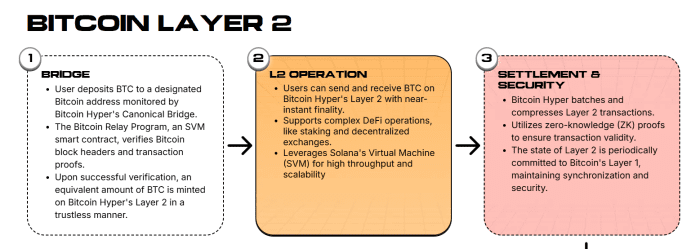
Bitcoin Hyper achieves this by integrating the Solana Virtual Machine (SVM) as its execution layer, enabling fast, low-cost transactions while retaining Bitcoin’s security for settlement.
Developers can migrate Solana-based dApps to Hyper with minimal adjustments, opening the door for proven projects to operate within the Bitcoin ecosystem. Through the Canonical Bridge, BTC locked on the main chain is converted into wrapped BTC for use in Hyper, preserving trust while unleashing new utility.
This design has investors arguing that Bitcoin Hyper combines the best of both worlds, the security of Bitcoin and the speed and versatility of Solana, potentially solving the blockchain trilemma while generating new avenues for token demand.
Bitcoin Stalls as Institutions Hold Back: Hyper Utility Awaits
CryptoQuant’s on-chain data reveals that BTC purchases by institutional treasuries have slowed significantly. Accumulation remains far less aggressive than at the beginning of the year.
For example, Strategy added only 1,200 BTC in August, while other firms acquired an average of 343 BTC each. This weakness is also reflected in ETF flows, which began to decline in late July. Indeed, during the week of August 18, more than $1 billion left Bitcoin ETFs, marking one of the sharpest declines of the year.
This drop in demand is keeping Bitcoin in a tight range. The leading crypto asset is hovering around $111,000, down 0.6% over two weeks and 4.7% over the past 30 days. Companies are adding BTC to their treasuries as a hedge against inflation and as a long-term store of value.
But in this context, Bitcoin lags behind gold, which offers utility beyond its role as an inflation hedge. Moreover, gold has industrial and cultural uses, while Bitcoin remains primarily a tool for storing digital wealth. In other words, we are not carrying digital currency.
For Bitcoin to truly compete with gold, it must move beyond its function as a store of value. This is where Bitcoin Hyper comes in. The project aims to make each BTC much more useful than just a trophy asset in institutional or retail portfolios.
Bitcoin Hyper: Solving the Blockchain Trilemma
Bitcoin Hyper enters the crypto arena by allowing developers to create a wide range of applications that are impossible to achieve on the main chain.
To achieve this, Layer 2 integrates the Solana Virtual Machine (SVM) as the execution layer. All dApps and contracts on Hyper run on the same engine as Solana, ensuring speed and low transaction costs, while leveraging the security of Bitcoin.
Because SVM is SPL-compliant, developers already working on Solana can migrate their applications to Bitcoin Hyper with minimal changes. This allows a large number of proven projects to quickly expand the Bitcoin ecosystem without starting from scratch.
The bridge between these two worlds is the project’s Canonical Bridge. Every BTC locked on the main chain can be transferred to the Hyper ecosystem, where it becomes a wrapped BTC fully usable in the Solana-powered environment. This mechanism unlocks Bitcoin’s utility and redirects activity to a faster execution layer.
However, it all comes back to Layer-1 Bitcoin for security and settlement. When a user wants to retrieve their Bitcoin, they simply burn the wrapped version to unlock the original BTC. In short, this process ensures that, despite Hyper ‘s scalability and speed , Bitcoin’s trust layer remains intact.
This combination has some investors arguing that Bitcoin Hyper brings together the best of both crypto worlds. This is why it could represent the most robust answer to Vitalik Buterin ‘s blockchain trilemma.
HYPER’s Launchpad: From Solana Speed to Bitcoin Security
As mentioned, migrating a Solana-based application to the Bitcoin Hyper ecosystem remains relatively straightforward. Developers run their projects at Solana’s speed while securing them on the most decentralized and censorship-resistant blockchain available.
Moreover, this design doesn’t just benefit Bitcoin. It also generates direct demand for HYPER, the token that powers gas fees, staking, and governance. While BTC serves as the medium of exchange in the Hyper ecosystem, it is HYPER that powers the system.
This is why many investors consider HYPER as their second chance after missing out on BTC’s first surge. If Bitcoin Hyper becomes the center of dApps, then HYPER positions itself at the heart of a new demand channel for BTC utility. For example, DeFi on Solana alone holds $11.2 billion in total value locked.
If even a quarter of this activity migrates to Bitcoin Hyper, it could trigger a massive volume of BTC transactions not just related to price speculation. And that’s just one sector. So by adding gaming, NFTs, and tokenized real assets, the scale of the opportunity becomes even more impressive.
This is why popular crypto influencers, including Crypto Tech Gaming, have highlighted Bitcoin Hyper’s potential to generate 100x returns.
Race to $15 Million: Secure Your HYPER Tokens Before the Surge
Bitcoin Hyper’s presale is moving at lightning speed, with an average of $150,000 raised daily. At this pace, the next major milestone of $15 million could be reached in less than two days, making it one of the most critical windows for investors to get in early.
With altcoins dominating the spotlight this month, HYPER presents a rare opportunity to secure tokens at one of the lowest presale prices before the next phase pushes the value higher. Participating is straightforward and accessible.
Investors can purchase HYPER using popular cryptocurrencies such as SOL, ETH, USDT, USDC, or BNB or even via a credit card for maximum convenience. Newly acquired tokens aren’t just sitting idle: they can be staked through Bitcoin Hyper’s protocol, offering a dynamic and explosive yield of 76% APY.
This allows early adopters to start earning while contributing to the ecosystem’s growth. For a seamless experience, Best Wallet provides direct access to the presale. HYPER is listed under the “Upcoming Tokens” section, making it simple to buy, track, and claim once the token becomes active.
Investors can also stay up to date with the latest news, community updates, and real-time discussions on Telegram and X. With momentum building quickly, now is the moment to be part of Bitcoin Hyper’s historic growth and secure your stake before the surge.