
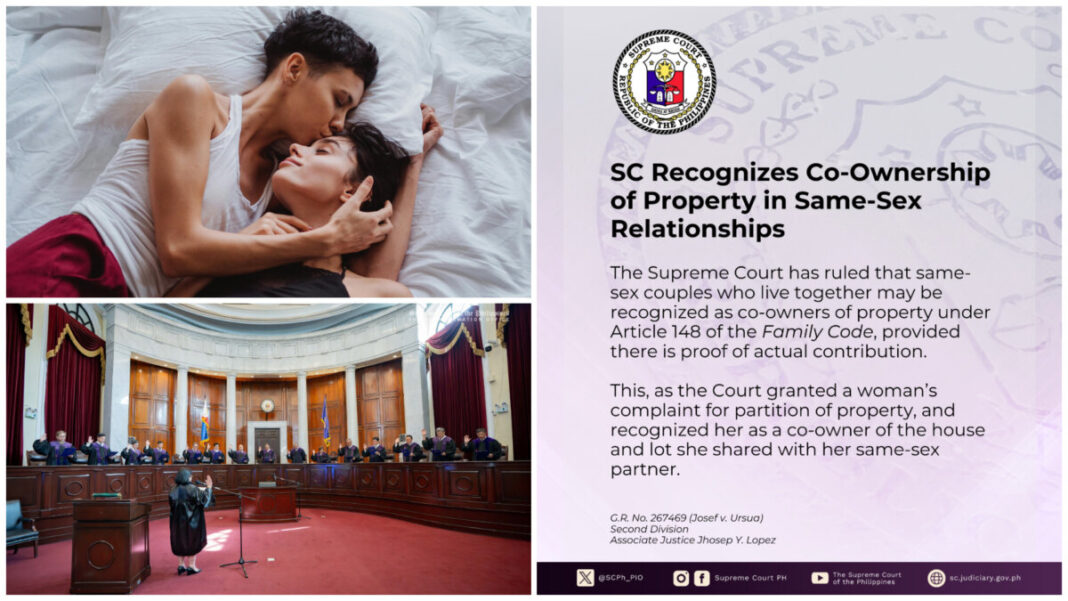
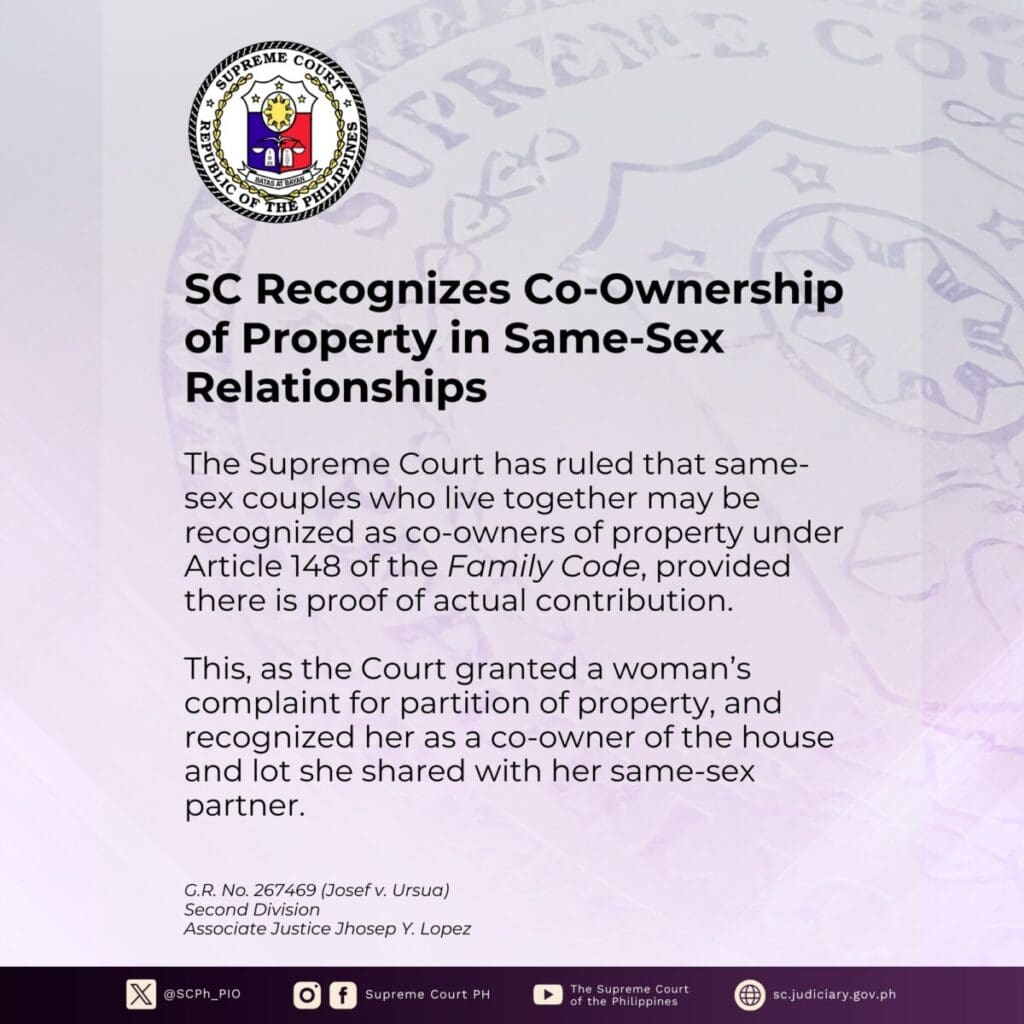
In a landmark ruling, the Supreme Court has opened doors for same-sex couples seeking recognition of shared property. The decision highlights how contributions during cohabitation can establish co-ownership even without marriage. Read on to discover how this ruling affects couples and what it means for property disputes.
The Case That Changed Everything

The decision stemmed from a Quezon City property dispute between two women who once lived together. They had purchased a house and agreed to register it under one name to simplify banking matters. When their relationship ended, one partner refused to acknowledge the other’s contribution.
Article 148 Comes Into Play
Under the Family Code, Article 148 governs property relations for couples who cannot marry. Unlike heterosexual couples, whose jointly acquired properties are presumed shared under Article 147, same-sex couples must show actual contribution. A signed acknowledgment proving financial participation served as key evidence in this case.
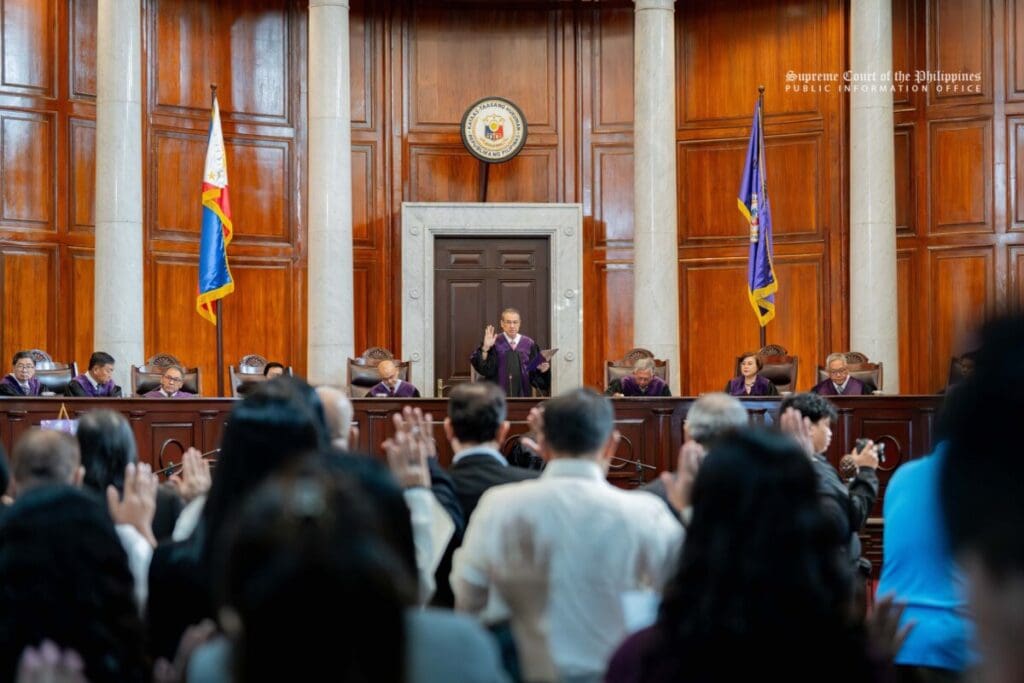
The Supreme Court Weighs In

The High Court reversed lower court rulings that denied co-ownership. It recognized that contributions to purchase and renovation establish equal rights to the property. The ruling emphasizes that legal recognition does not require marriage but depends on tangible proof of participation.
Voices of the Justices

Senior Associate Justice Marvic Leonen noted that same-sex relationships are normal and deserve legal visibility. Justice Amy Lazaro‑Javier added that Article 148’s provisions are broad enough to include all cohabiting couples. Both opinions stress fairness and equality in the treatment of intimate partnerships.
Beyond the Courtroom

The SC stressed that legislation is still needed to fully protect same-sex couples’ rights. Courts can safeguard property interests, but Congress must address broader social, moral, and cultural concerns. Advocacies and public campaigns play a vital role in shaping policies that reflect modern realities.
What This Means for Couples

The ruling allows same-sex partners to seek co-ownership if they can prove contribution to a property. Couples planning to live together can now consider formal agreements or acknowledgments to protect their investments. This decision is a milestone in acknowledging diverse relationships under Philippine law.
Moving Forward

The case has been remanded to the Quezon City RTC for enforcement of the SC decision. Legal experts say it sets a precedent for similar disputes nationwide. As conversations around LGBTQ+ rights continue, the ruling signals that the law can evolve to recognize real-life partnerships.