
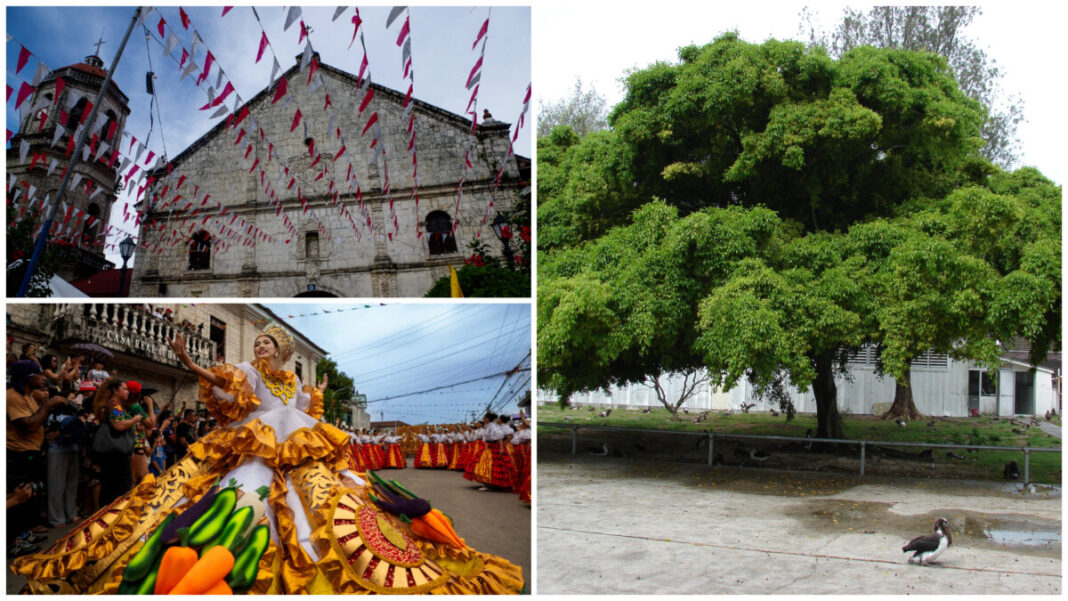
Long before Spanish colonization, the area now known as Dalaguete was home to large dalakit trees (Ficus benjamina). These towering trees served as gathering places where residents met, traded goods, celebrated community events, and settled important matters. Their wide branches provided shade, while their massive roots became familiar landmarks that people used when giving directions.
Historical accounts written by Jesuit missionary Fr. Francisco Ignacio Alcina in the 17th century described the dalakit as a tree held in high regard by the native people. Beyond its size, it was believed to be the dwelling place of spirits or diwatas, making it an important part of local beliefs and traditions.

From Dalakit to Dalaguete
As the community grew, the area where the large dalakit tree stood became the center of daily life. Residents would commonly say, “Adto ta sa dalakit,” referring to the place where they would meet. Over time, the gathering place became closely associated with the settlement that eventually developed into a town.
When Spanish authorities established the poblacion and built the church, they retained the familiar place name but recorded it using Spanish spelling. Since the Spanish alphabet did not use the letter “K,” the word “dalakit” was written as “Dalaguet,” which later evolved into the present-day spelling, Dalaguete.

Why Many Locals Pronounce It as “Dalagiti”
Although the municipality is officially spelled Dalaguete, many lifelong residents pronounce it as “Dalagiti.” The pronunciation has remained common in everyday conversations and is also the version frequently promoted by the local government during tourism campaigns and public events.
This local pronunciation reflects the town’s linguistic heritage rather than the Spanish spelling. For many residents, saying “Dalagiti” preserves the way the name has been spoken across generations, even as the written form remained unchanged.

History Preserved Through Language
The story of Dalaguete shows how place names can preserve centuries of history. What began as a community gathering place beneath a giant dalakit tree eventually became one of southern Cebu’s historic municipalities. The spelling may have changed through colonial influence, but the local pronunciation continues to remind residents of the town’s earliest roots.
Today, both visitors and locals recognize Dalaguete for its cool mountain destinations, heritage sites, and rich culture. Behind its name is a history that connects the present generation to the traditions, language, and stories of the people who first called the place home.