
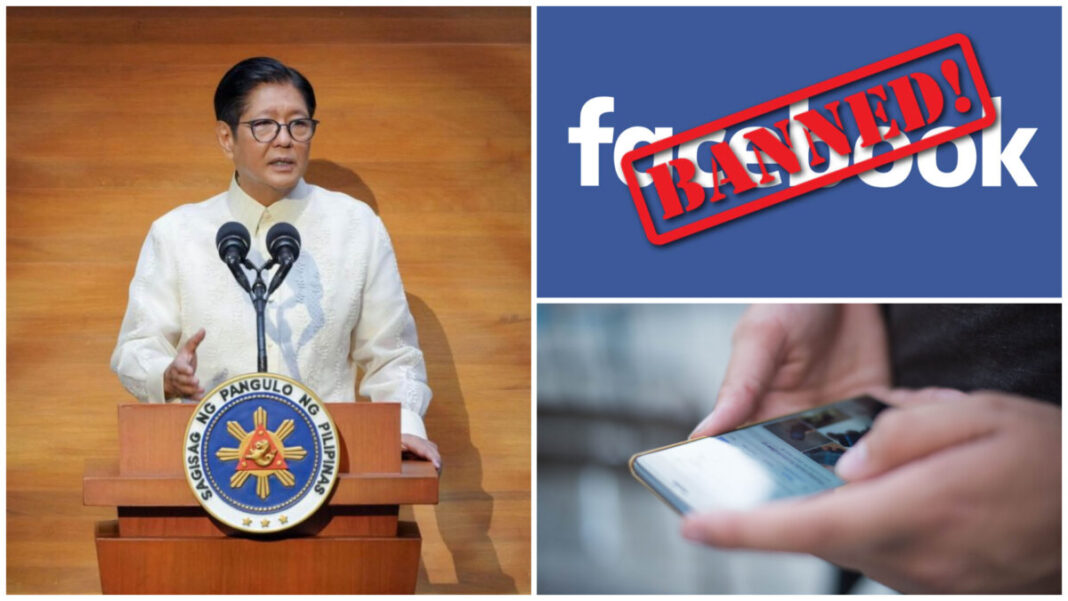

A familiar part of everyday life could face a major change as the government weighs how much responsibility social media platforms should carry for harmful content. The discussion comes as authorities examine the role of online platforms in violence, misinformation and the safety of young people. While no ban has been ordered, Malacañang has signaled that stronger action could be considered. Read on to find out why Facebook is now at the center of the government’s growing concerns over online safety.

CICC raises Facebook ban
The issue surfaced after the Cybercrime Investigation and Coordinating Center (CICC) said it was studying a proposal to ban Facebook or Meta platforms following the deadly shooting at Ateneo de Zamboanga University. The August 18 incident at the school’s Junior High School campus left a student and the suspected shooter dead. Authorities also reported that the incident was livestreamed on social media, prompting renewed concerns over how violent acts and harmful material spread online.
Palace keeps the option open
Malacañang has not announced a Facebook ban, but President Ferdinand “Bongbong” Marcos Jr. is open to proposals that could remove platforms found to pose serious risks to the public. Palace Press Officer and Presidential Communications Office Undersecretary Claire Castro said on Tuesday that possible restrictions would first need to be studied. The review would look at whether platforms are helping prevent violence, misinformation and other online harms.

More than Facebook
The discussion is not limited to Facebook. Castro said the government could also consider other social media services and gaming applications if studies show that they are harmful to young people or the country. The Palace said the possible measures would depend on evidence and on how platforms respond to government efforts to protect users. This means the wider issue is becoming one of online accountability rather than a single-platform concern.
Fake news enters the debate
Misinformation is another major concern raised by the Palace. Castro said authorities also need to determine whether social media platforms contribute to the spread of fake news, particularly when platforms are slow to respond to requests involving public safety. The Palace stressed that the concern over fake news should not be confused with legitimate criticism or personal opinions.
Free speech remains a concern
The possibility of banning social media platforms also raises questions about freedom of expression. Castro said criticism of the government is not being treated as prohibited speech, while the administration’s concern is focused on the spread of false information and harmful content. Any action against a platform would therefore need to consider both public safety and the rights of users.
Government already tightening online safeguards
The discussion comes as government agencies are already strengthening measures against harmful online material. The Department of Information and Communications Technology said it is coordinating with the National Telecommunications Commission, CICC, Philippine National Police, internet service providers and digital platforms to improve threat monitoring and online safeguards. Several telecommunications companies have also stepped up voluntary blocking of websites carrying graphic violence, school shooting footage, child sexual abuse material and other prohibited content.

What happens next?
For now, there is no confirmed Facebook ban in the Philippines. The Palace position is that any restriction should follow a study of the risks, the platforms’ accountability and their response to government requests. As authorities continue investigating the Zamboanga school shooting and strengthening school safety measures, the debate over how social media should be regulated is likely to continue.