
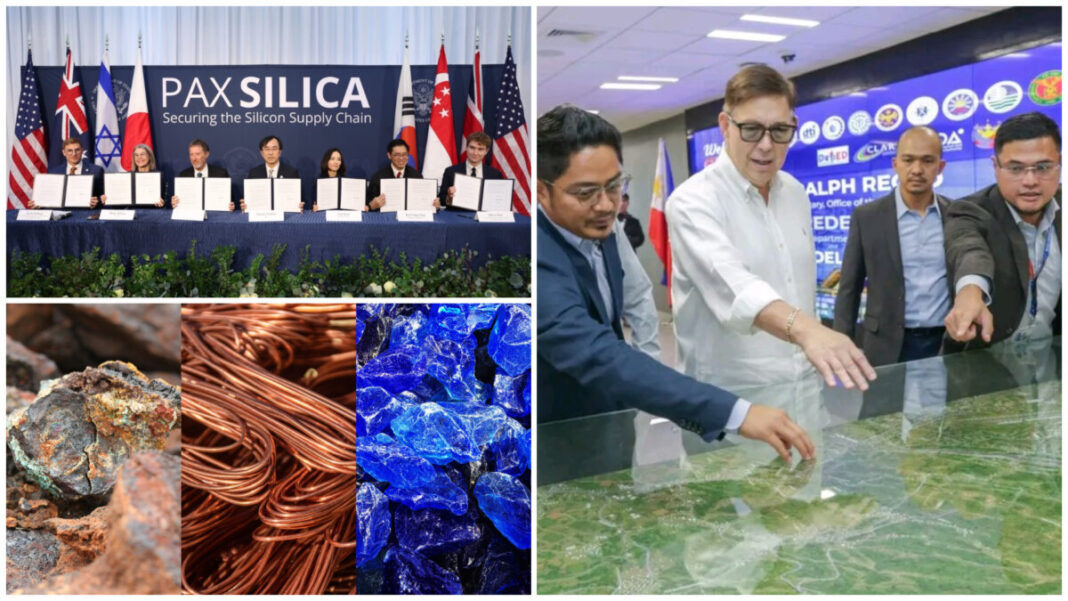
“Negosyo o kalayaan? Bayan o sarili? Pumili ka!” This powerful line from Heneral Luna stirred the patriotism of many Filipinos when it echoed through cinemas last 2015. Years later, the question still feels relevant, especially as the Philippines enters another defining moment, not on the battlefield, but in the global war for artificial intelligence and semiconductor technology. As the country joins the US-led Pax Silica initiative, it is promised new industries, more jobs, and a stronger position in advanced manufacturing. Yet behind these opportunities are growing concerns over energy demand, water resources, environmental impact, and whether the country’s long-term interests will come before those of foreign investors. So, does the same question still stand today? As the Philippines embraces Pax Silica, Filipinos are once again left to ask where the nation’s priorities should lie.

What Is Pax Silica?
Pax Silica is an international initiative designed to create stronger and more secure supply chains for artificial intelligence, semiconductors, and critical minerals. The name combines “pax,” a Latin word meaning peace or stability, and “silica,” a material used in producing computer chips.
The US-led partnership aims to connect countries involved in different parts of the technology industry, from mining important minerals to manufacturing components needed for modern devices and AI systems. The initiative currently includes more than 20 partner countries, including the Philippines.

Philippines Plans AI and Semiconductor Hub
As part of its participation, the Philippine government is planning an Economic Security Zone in New Clark City, Tarlac. The proposed hub covers around 1,620 hectares and is envisioned as a center for advanced manufacturing, semiconductor production, and technology-related industries.
Government officials said the project will focus on producing high-value components instead of simply exporting raw materials. The goal is to process critical minerals within the country, attract investments, create jobs, and allow more economic value to stay in the Philippines.

Why AI Needs More Chips and Infrastructure
The rise of artificial intelligence has increased global demand for semiconductors, which serve as the foundation of computers, smartphones, and AI systems. Data centers that power AI services rely on powerful computers that require large amounts of electricity and cooling systems.
Because of this growing demand, countries are competing to secure access to semiconductor production and mineral resources. The Philippine government sees Pax Silica as an opportunity to participate in an industry expected to shape the future economy.

Government Sees Economic Opportunity
Officials believe the project could help the Philippines move beyond traditional manufacturing roles. Department of Trade and Industry officials said the country’s location, skilled workforce, and mineral resources make it attractive for technology investments.
Finance officials also described the initiative as a possible long-term economic opportunity that could bring more companies, industries, and employment opportunities. They said joining Pax Silica could help the country become a stronger player in the AI and semiconductor sectors.
Concerns Over Electricity and Water Demand
Despite the expected benefits, environmental groups and some lawmakers have raised concerns about the resources needed to operate large technology facilities. AI-related industries require significant amounts of electricity and water, especially for cooling systems used in large data centers.
The Makabayan bloc warned that the proposed project could place additional pressure on the country’s power supply. The group questioned whether the Philippines has enough electricity capacity to support new industrial facilities while maintaining affordable power for households and local businesses.
Environmental advocates also called for scientific studies on the project’s possible impact, particularly on water availability. They said large technology facilities must be carefully planned to avoid competing with the needs of surrounding communities.

Questions About Land and Communities
Another issue raised by critics involves possible effects on communities near the planned development area. Environmental groups have expressed concerns about possible displacement of farmers and Indigenous communities, while government officials have said the project site is government-owned land.
The Bases Conversion and Development Authority, which oversees New Clark City, said environmental requirements will be followed and affected communities will be provided with assistance programs if necessary. Officials also said the development will undergo proper assessments before implementation.
The Debate Over Critical Minerals
Critical minerals such as nickel, copper, and cobalt are important materials for modern technologies. The Philippines has large mineral resources, making it a valuable partner in global supply chains.
However, mining expansion has raised concerns among environmental groups because of past issues involving deforestation, damaged waterways, and impacts on communities near mining areas. Critics argue that the country must ensure that resource extraction benefits Filipinos while protecting the environment.

More Than Just a Technology Project
Supporters describe Pax Silica as a chance for the Philippines to enter higher-value industries, while critics warn that the country could remain focused on supplying raw materials and labor without gaining enough technology transfer.
The challenge for the government will be ensuring that the project creates lasting benefits rather than becoming another export-focused development model where most profits leave the country. Strong environmental protections, transparent agreements, and investment in Filipino workers will play an important role in determining its success.
The Future of Pax Silica in the Philippines
Pax Silica represents both an opportunity and a challenge for the country. It could open doors for advanced manufacturing, new jobs, and stronger participation in the global technology industry, but it also raises important questions about energy security, environmental protection, and national interests.
As the Philippines moves forward with the initiative, the success of Pax Silica will depend not only on attracting foreign investments but also on ensuring that progress reaches Filipino communities while protecting the country’s resources for future generations.