
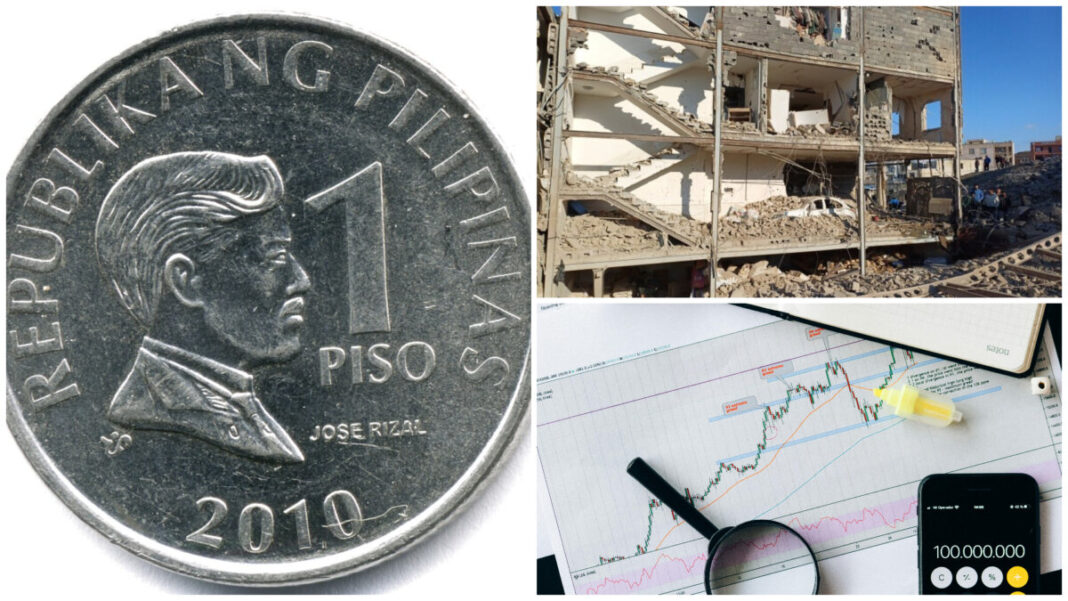

Whether you’re a student, a business owner, or an everyday consumer, the value of the peso affects your daily life. The Philippine currency recently tumbled to a historic low, crossing the P60-per-dollar mark as geopolitical conflicts and rising oil prices rattled global markets. From buying imported goods to paying for fuel, this decline touches nearly every Filipino household and business. Understanding why the peso is sliding and what it could mean is key to navigating the months ahead.
Global Conflicts Shake Investor Confidence

Escalating hostilities between the United States, Israel, and Iran have sent investors flocking to the safety of the US dollar. According to MUFG Bank Ltd., the peso has fallen approximately four percent since late February, ranking it among the worst-performing Asian currencies, just above the Thai baht’s 4.9 percent decline. The peso touched a record low of P60.1 per dollar on March 19, with further weakness recorded in subsequent trading. Analysts warn that unless global tensions ease, the currency may remain entrenched above the 60 level for some time.
Oil Prices and Import Costs Drive Demand for Dollars

The Philippines relies heavily on imported petroleum products, making oil price spikes a major factor in peso volatility. Higher global oil prices increase demand for US dollars, pushing the local currency downward. Economist Emmanuel Leyco explained that the peso’s slide reflects strong dollar demand due to elevated petroleum costs. Rising energy prices also intensify inflation pressures, particularly in essential goods like food, which make up a large portion of the consumer price index.
Central Bank Faces Policy Challenges

The Bangko Sentral ng Pilipinas (BSP) lowered its key policy rate to 4.25 percent in February to stimulate growth after the economy posted a 4.4 percent expansion in 2025, missing the government’s 5.5 percent target. While the easing cycle has helped support activity, the peso’s historic decline reduces the central bank’s ability to continue monetary stimulus. BSP Governor Eli M. Remolona Jr. noted that economic revival now relies heavily on fiscal reforms and addressing governance gaps, including recent controversies over flood control funding. MUFG analysts also cautioned that sustained oil prices above $100 per barrel may force the BSP to pivot back to tightening.
Impact on Fiscal Markets and Borrowing Costs

The peso’s weakness has ripple effects on government borrowing. The spread on two-year government bonds rose 18 basis points to 263, while the 10-year spread increased 27 basis points to 218. Investor appetite for debt has declined, forcing the government to scale back a recent auction and award less than half of its P20 billion offer. This increase in borrowing costs could influence future infrastructure and development spending, making fiscal management more challenging amid ongoing currency volatility.
Market Reactions and Stock Exchange Performance

Financial markets have responded swiftly. Since the Middle East conflict began, the Philippine Stock Exchange has dropped more than 500 points, reflecting investor caution. Traders describe the peso’s current level as a near-term overshoot, likely to linger while uncertainty is high. However, a pullback below 60 remains plausible once external pressures ease, suggesting that volatility may moderate over the medium term.
Everyday Impact on Filipinos

For ordinary citizens, a weaker peso means more expensive imported goods, higher fuel prices, and increased costs for services tied to global commodities. Households and businesses alike are feeling the pinch as inflationary pressures grow. Analysts warn that if the geopolitical situation worsens, the peso could remain under pressure, affecting the cost of living and economic stability.
Looking Ahead

The peso’s historic slide highlights the Philippines’ vulnerability to global shocks and energy price fluctuations. While monetary policy provides some support, broader structural reforms, fiscal prudence, and effective governance will be key to stabilizing the currency. For now, consumers, investors, and businesses must navigate a challenging environment shaped as much by international developments as by domestic economic conditions.