

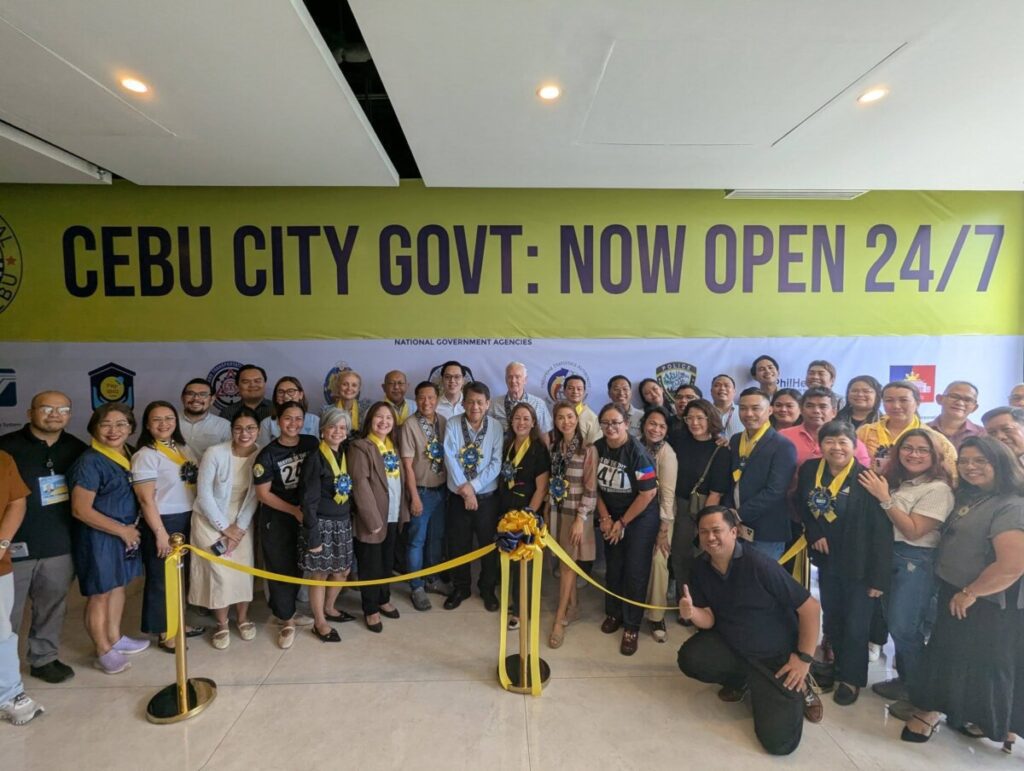
Cebu City residents now have access to government services anytime, day or night, with the official launch of the “Mayor of the Night” hub. The facility, inaugurated last Saturday at the Cebu Exchange Tower on Salinas Drive, aims to serve those who cannot transact during regular office hours, including night-shift employees, BPO workers, and other busy Cebuanos. City officials say the hub represents a major step toward making government services more accessible and efficient. Read on to find out what services are available, how the hub works, and why it has sparked both praise and criticism.
Services Ready on Day One

Mayor Nestor D. Archival led the inauguration, emphasizing the city’s commitment to serve citizens “anytime, for every Cebuano.” He said the facility is more than just a building; it symbolizes government accessibility beyond traditional office hours.
Vice Mayor Tomas R. Osmeña, who conceptualized the initiative, outlined the services available on the first day. Residents can access the City Treasurer’s Office, Business Permit and Licensing, Cebu City Transportation Office (CCTO), Civil Registrar, City Health, PhilPost, and the Philippine National Police. Regional directors from national agencies such as the Land Transportation Office (LTO), Philippine Statistics Authority (PSA), National Bureau of Investigation (NBI), Pag-Ibig Fund, and PhilHealth also pledged support, with plans to expand the services offered.
Osmeña highlighted the hub’s flexibility, noting that it is designed to accommodate both routine transactions and urgent needs, ensuring that all residents can complete government requirements without the constraints of daytime schedules.

Strategic Launch During BPO Day
The timing of the hub’s opening coincided with Cebu City’s celebration of BPO Day, recognizing its status as the “BPO Capital of the South.” The program aligns with the city’s effort to support thousands of IT-BPO workers who often work night shifts and cannot access regular government offices.
Business leaders, including Cebu Inter-BPO Organizations (CIBO) president Asseem Roy and executive director Buddy Villasis, expressed strong support. Councilors Winston Pepito, Jose Abellanosa, and Nice Archival also endorsed the initiative, noting that faster, round-the-clock government services could benefit residents and attract more businesses to the city.
Opposition Voices Concerns

Despite the widespread praise, Councilor Pastor “Jun” Alcover has been vocal in his opposition. He questioned the program’s feasibility and necessity, highlighting the ₱3,052,984 budget allocated to hire 20 project-based personnel to support operations. Alcover raised concerns over the timing, pointing out that the national government recently imposed a four-day workweek to conserve energy amid rising global fuel costs.
Alcover also criticized the claim that national agencies would participate, noting that no memorandum of agreement exists to obligate them to provide services at night. He warned that the program could be costly without guaranteeing sufficient public benefit.
Operational Details and Requirements

Under Executive Order No. 027, Series of 2025, the hub requires personnel to manage day-to-day operations, including assisting residents, ensuring smooth coordination between offices, and maintaining security and cleanliness. The facility is designed to reduce congestion in regular offices and provide an efficient, one-stop transaction center.
Mayor Archival emphasized that the hub is meant to complement existing government offices rather than replace them. Services are expected to expand gradually as more agencies commit to participate and resources are allocated to maintain operations around the clock.
Convenience and Efficiency

City officials believe the hub will streamline public transactions, reduce waiting times, and provide convenience for residents who have limited daytime availability. Safety and security are priorities, with proper staffing and coordination with police and other enforcement units.
The Mayor of the Night also features environmental safeguards, including waste management and proper facility maintenance, ensuring a clean and orderly space for residents. Public accessibility and inclusivity are emphasized, with plans to cater to different segments of the community, including the elderly and persons with disabilities.
Looking Ahead

While city leaders tout the hub as a major step toward a “city that never sleeps,” critics remain cautious, urging monitoring of costs and effectiveness. Alcover said he plans to send representatives to observe daily operations, while encouraging residents to visit the hub themselves to gauge its impact firsthand.
The Cebu City Government expects the initiative to set a new standard for public service accessibility, balancing convenience, efficiency, and accountability. Whether the Mayor of the Night becomes a model of continuous government service or a costly experiment will depend on public adoption, agency cooperation, and long-term operational planning.