
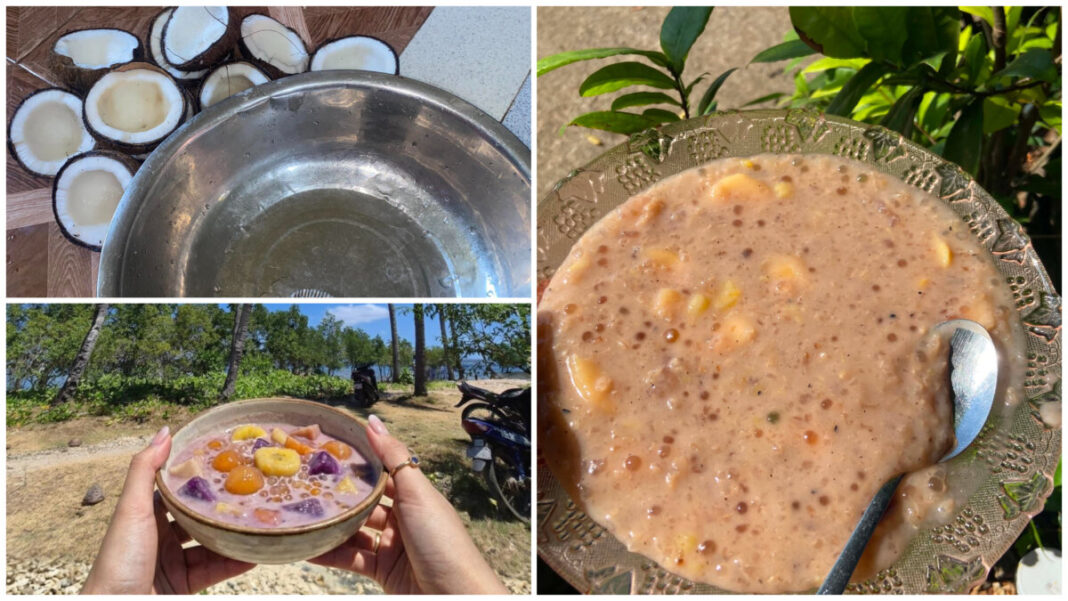

Binignit is a traditional Visayan dessert and snack, made especially during Holy Week. It is a type of sweet lugaw (rice gruel) cooked in coconut milk and cream, featuring tubers like taro, sweet potato, purple yam, saba banana, glutinous rice, sago, and unique palm flour jelly balls called landang.
Binignit vs. Ginataang Bilo-Bilo

- Regional Name: Binignit is the Cebuano/Visayan counterpart of Luzon’s ginataang halo-halo or bilo-bilo.
Key Ingredient Differences:
- Binignit uses landang (palm flour jelly balls), whereas ginataang bilo-bilo features glutinous rice balls called bilo-bilo.
- re from landang and tubers, with natural sweetness from saba and coconut milk.
Cultural Importance in Cebu

- Historically, Cebuano farmers made binignit during Holy Week as a meatless but energy-rich dish to sustain them while working their fields.
- It has become a symbol of family and community bonding, with big pots shared among relatives and neighbors during Lent.
- Local Cebuanos have personal preferences for sweetness, color, and consistency, making each family’s binignit recipe unique.
Why Cebuanos Love Binignit

- It’s comforting, versatile, and can be served hot or cold.
- Beyond taste, it carries memories of provincial life, family gatherings, and slow living, connecting modern Cebuanos to their cultural roots.
- It’s a staple of Holy Week celebrations, a tradition that persists across generations.
Final Verdict

Binignit is more than just a Visayan version of ginataang halo-halo—it’s a cultural icon of Cebu, uniquely defined by landang, local tubers, and centuries-old traditions that make it distinctly Cebuano.